Showing posts with label Chevrolet. Show all posts

Monday, January 7, 2013

Chevrolet Camaro EU Version, 2012


  •  Chevrolet Camaro EU Version, 2012

The all-new 432 hp Chevrolet Camaro V8 has returned to Europe after a decade-long absence, with a design that is at once instantly recognizable and entirely modern.

The contemporary 21st century design is an expression of the Chevrolet Camaro's rich heritage, with a V-shaped nose, wide, planted stance and broad rear shoulders all distinguishing features that acknowledge the legendary past while claiming a place as a contemporary design icon.

The Chevrolet Camaro's vital stats are as impressive as its design: the manual transmission boasts a superb 432 hp 6.2-liter LS3 V8 engine that produces 569 Nm of torque at 4,600 rpm. This translates into a 0-100 km/h acceleration of 5.2 seconds for the coupe and 5.4 seconds for the convertible. The automatic transmission is mated to a 405hp 6.2 L L99 V8 engine that produces 556 Nm at 4,300 rpm. The automatic coupe hits 100km/h in 5.4 seconds, with an additional 0.2 seconds for the convertible. The Camaro has an impressive top speed of 250 km/h.

Prices for the coupe start at €38,900 while the convertible prices start at €43,900, although prices may vary across markets, depending on local taxation and import duties. The Transformers® Special Edition and 45th Anniversary package come at an additional €2,000 each including VAT.

Fully European
The car makes its presence felt from afar, with the deep low- frequency rumbling V8 delivering an unequivocal message of its impending arrival.

The European Chevy Camaro is similar in content to the 2SS model offered in North America. The new model, Europe's first, features an all-new FE4 suspension that was developed specifically for Europe. The suspension - characterized by an increase in stiffness and lateral stability that greatly improves high-speed performance and maneuverability - has proven so popular that the US will be offering it on their up-level models with the new model year. The FE4 suspension package features re-tuned front and rear dampers, and new solid front (23 mm) and rear (24 mm) stabilizer bars.

"Our objective was to create a more precise sport suspension with greater road-handling capability. We applied lessons learned from extensive track testing to better the suspension geometry for flatter cornering, a more neutral balance during hard turns and minimized understeer at the limit," says Al Oppenheiser, Camaro Chief Engineer.

The 20-inch wheels riding on Pirelli PZero tires ensure that the power is translated adequately while the Brembo four-piston anti-lock disc brakes combined with StabiliTrak and traction control ensure effective braking and quick cornering. The wheels are positioned outbound to be virtually flush with body surfaces for an agile, planted appearance.

Jaw-dropping exterior design
If you crave anonymity and blending in with the crowd, the Chevrolet Camaro is probably not the car for you. The head-turning design tends to do just that, with pedestrians and motorists alike looking on in awe and admiration as the Camaro makes its commanding way down the road.

The V-shaped nose is flanked by high-intensity discharge headlamps with glowing LED Xenon halo rings, mimicking deep-inset eyes and giving the Chevrolet Camaro a menacing look. Chevrolet's 'gold bowtie' proudly adorns the front-end of the car and directs your eyes across the power dome hood, which gives a dynamic feeling of motion even when stationary.

The rear fascia is unique to the European Chevrolet Camaro models. Twin LED tail lamp elements mirror the unique look of the vehicle's front. The rear design is finished off with large, round chrome exhaust tips similar to those used on the Corvette Z06.

Interior design
An array of sound-limiting applications ensures that you are transported to a different world as soon as you sit inside a Chevrolet Camaro, although a hint of the burble of the V8 penetrates the interior by design. It's just enough to remind you where you are and what you're doing.

Carrying forward the spirit and feeling of Camaros of the past, the interior conveys simplicity and refinement, with contemporary details in the dials, switches, cluster and ambient lighting.

The integrated center stack design combines easy-to-reach stereo and HVAC controls into a single piece of modern electronics with oversized knobs - detailed with rubber grommets and chrome - to match the character of the nameplate.

The Chevrolet Blue Ice ambient light runs across the doors. The same blue hue characterizes the speedometer on the left and rev counter on the right, with further driver information displayed in between. Optional orange ambient lighting is available with the Inferno Orange Interior Trim.

The four-pack gauge cluster fore of the shifter, harks back to the iconic 1969 Camaro, but includes contemporary LED backlighting. The package includes gauges for oil temperature, oil pressure, transmission fluid temperature and battery voltage.
The performance seats have sport bolstering and shape-carrying champhered shoulders with accent stitching.

Technological marvel
A large Driver Information Center (DIC) provides all the data - including consumption, trip information, and tire pressure - needed while on the road. The Chevrolet Camaro is the only vehicle in its class to offer a standard Head Up Display (HUD) that displays vital information, such as speed and stereo selection, on the windshield so drivers can always keep their eyes on the road. Ultrasonic rear parking assist with camera and six airbags are standard, as are ISOFIX anchors for the very young sports car fans.
The Chevrolet Camaro offers the discerning music aficionado a premium Boston Acoustics nine-speaker stereo system. USB ports for personal devices and Bluetooth connectivity are also part of the package.

Active Fuel Management
While fuel economy may not be high on the priority list of a Chevrolet Camaro owner, the Active Fuel Management system on the L99 engine automatically shuts down four of the eight cylinders during light load operations, allowing for reduced fuel consumption. This results in savings of up to 7.5 percent.
The Chevrolet Camaro manual models have a combined consumption figure of 14.1 L/100 km. The automatic variants fare even better with a combine consumption of 13.1 L/100 km.

Design
The jaw-dropping design of the fifth generation Chevrolet Camaro is an irresistible invitation to get in and drive away. The legendary car's return after a ten year absence brings with it a fusion of modernity, confidence and soul.

It is hard to decide where to look first - the immediately recognizable V-shaped nose that has become a Chevrolet Camaro trademark, the unmistakable tail, or the sculpted rear shoulders. All details of the car have been carefully designed to re-capture the spirit of the legend that first rolled off production lines 45 years ago while creating an thoroughly modern, 21st century sports car.
From the outside, there is no mistaking the four-passenger coupe as a modern interpretation of its legendary 1969 predecessor - strong, wide shoulders, long dash-to-axle, low roof line and large wheels.

The look
High-intensity discharge headlamps with glowing xenon halo rings, mimicking deep-inset eyes, complement the V-shaped front grille and give the Chevrolet Camaro an aggressive ready-to-pounce stance. The sweeping long hood and short rear deck accentuate the Chevrolet Camaro's iconic look and feel.

The hood carries a 10 centimeter power bulge, leaving little doubt as to what lies beneath and highlighting its sports car heritage.
The one-piece body shows off the bold lines that have become a distinguishing feature of all Chevrolet cars. Only here, the style is better defined and the clean creased lines are set off by muscular wheel arches. Rear quarter gills are stamped into the sheet metal just fore of the rear wheel, with a nod to a design element of the original concept car.

The sculpted rear shoulders set the stage for a stunningly-designed rear end. The unique, European specific LED tail lights are also inset and complement the image portrayed by the front of the Chevrolet Camaro. The dual outlet stainless steel exhausts have polished tips and complete the ensemble, creating an appealing blend of technology, design and performance.
A lower body side spear is formed seamlessly into the front quarter, door and rear quarter sheet metal delivering a muscular wheel-oriented cue and refined forward moving appearance, clearly defining its rear-wheel capability.

The Chevrolet Camaro sits on standard 20-inch wheels, a final touch of design and also a needed feature to transfer the engine torque to stunning forward movement. The wheels are positioned outward and flush with the body, giving the car a planted appearance.
The only feature more spectacular than the body of the car is what is underneath the hood (see Engines and Transmissions chapter).

Stylish and functional interior
The outlook on the world suddenly changes when you sit in a Chevrolet Camaro. You are immediately welcomed by a retro-styled contemporary dashboard with multi-dials ready to provide you with all the information pertaining to the functioning of the vehicle.
As the sport seats anchor you into position, the ambient light gives a blue hue that runs all the way across the upper edge of the doors. And once you have absorbed all this, you notice that while you are looking out, everybody on the outside is looking in.

Iconic look and feel
The interior of the Chevrolet Camaro presents an organized and functional setting, aimed at making the driver's job easier without losing any of the car's iconic look and feel. The revised instrument panel appearance presents a classic stance with contemporary details.

The steering wheel offers support for sporty driving and also includes cruise control, Bluetooth, iPod/MP3 and stereo functions to keep the eyes on the road and the hands on the wheel.

The leather seats provide support with sport bolstering carry champhered shoulders with accent stitching that is also seen on the shift, door, center console and steering wheel. They give drivers excellent lateral support and an added dose of confidence-inspiring comfort. The rear seat folds down completely to enable transport of longer items.
The HurstTM-branded short-throw shifter is designed to give the driver enhanced grip, critical when quick changes are required.

Dashboard blues
The Chevrolet Ice Blue lighting takes center stage on the Camaro dashboard and provides the perfect backdrop for the speedometer and engine temperature indicator, to the left of the steering wheel, the tachometer on the right and the large Driver Information Centre (DIC) in the middle of the display.

The DIC includes a digital speedometer, trip information - such as average consumption, distance travelled and fuel range - and a graphic display of tire pressure monitoring. An adjustable Heads Up Display (HUD), the only one offered in Chevrolet Camaro's segment, makes it possible for drivers to monitor all important information without taking their eyes of the road. The information is projected into the windscreen and appears as if located at the front end of the hood or slightly above it.
An integrated center stack design combines the stereo and HVAC controls into a single unit. Large dials, detailed with rubber grommets and chrome, match the character of the nameplate and make usage easier while driving.

A four-gauge cluster has been placed under the stereo/HVAC controls, harking back to the classic 1969 Camaro but with a contemporary look and backlighting. The cluster includes gauges for oil temperature, oil pressure, transmission fluid temperature and battery voltage.

Despite being a performance car, the Chevrolet Camaro has ample storage space in the doors, center console, glove box and cup-holder in the central console. Additionally, the 245-watt, nine- speaker Boston Acoustics® premium sound system ensures excellent sound quality.

The Rear Vision Package adds a rear view camera system and an auto-dimming mirror to the existing Rear Park Assist feature. The camera system complements the rear parking assist by providing a video display of the area behind the car with the video image appearing in the car's inside rear view mirror.

Safety features
Safety is also a key element engineered into the Chevrolet Camaro. It comes with six airbags, dual stage on both the passenger and driver sides for head and chest protection, seat-mounted pelvis-thorax side airbags for driver and passenger, and roof rail side curtain airbags for head protection for all occupants on the coupe.

Seat belts are equipped with load-limiting retractors and pre-tensioners aimed at reducing injury risk in frontal, offset frontal and lateral crashes. Further injury risk minimizers include a collapsible propshaft, break-away brake pedals and a ride down mechanism on the collapsible steering column.

Ride and Handling
From the frozen terrains in Sweden to test tracks in Germany - including the famed Nürburgring - and Australia, the Chevrolet Camaro has been put through its paces to provide a ride and handling that satisfies the specific European driving style.

A nearly ideal 52/48 front to rear weight distribution, providing a stable center of gravity, combined with an impressive FE4 suspensions and a tuned chassis means the Camaro will handle transitional situations beautifully and claw its way round corners with impressive agility.
The vehicle is designed to match the specific driving habits of Europeans, with tight cornering and performance handling characteristics among the best in its class. The precise handling dynamics were developed on different road surfaces and conditions around the world - including Australia, Germany, Sweden, Canada and the U.S.
A number of professional drivers provided input to help determine the perfect characteristics that make the Chevrolet Camaro what it is.

Smooth operator
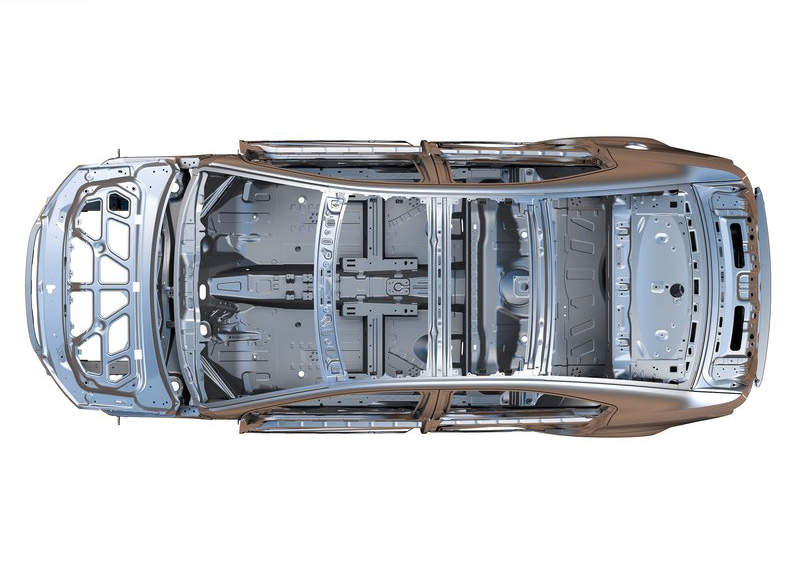
The Camaro boasts a smooth and sophisticated ride, enhanced by a high-strength steel central structure, and polished road manners. The car is equally at home at cruising speeds and during performance runs.
The FE4 suspension geometry had been adjusted, including front (23 mm) and rear (24 mm) reshaped stabilizer bars that are repositioned outboard of the shock mounts. This results in more effective body control and more precise response in performance driving.
The unique 4.5-link independent rear suspension is double-isolated from the chassis for a smoother, quieter driving experience.

Four modes of driving
Precise and responsive steering contributes to cornering confidence as it provides great driver feedback. The Chevrolet Camaro chassis control system allows drivers to select the mode of driving:
    Base Stability Control Calibration
    Traction Control off / Stability Control on
    Competitive / Sport mode
    Traction Control off / Stability Control off

The vehicle is equipped with StabiliTrak, a four channel active handling system that links the car's dynamic control system to assist the driver in maintaining control under demanding or adverse conditions, such as wet, snow-covered or icy roads, tight turns and evasive maneuvers.
StabiliTrak combines the Anti-lock Brake System (ABS), Traction Control (TC) and Active Braking Systems to control wheel slip, optimize wheel spin and enhance vehicle stability.

The speed of all four wheels is monitored separately by the ABS, allowing for individual braking power directed to the wheels and resulting in superior control of the vehicles. Back-up braking is activated should one of the two braking circuits fail. Additionally, the ABS software uses a steering wheel angle sensor to differentiate between straight-line and corner braking.

The Traction Control System is integrated with the ABS and uses the powertrain and brakes to regulate wheel spin during acceleration. Further control is provided by the Hydraulic Brake Assist (HBA) which senses emergency braking by detecting the speed or force the driver applies to the brake pedal. Under extreme conditions, the HBA will apply the brakes selectively to maintain control.

Engine Drag Control (EDC) sends more torque to the driven wheels when the driver lifts off the throttle in precarious road conditions, such as in the presence of ice or rain. The resulting effect ensures vehicle stability as all four wheels, the free-rolling front and driven rear, are travelling at the same speed.

Massive 20-inch alloy wheels transfer the engine torque to the ground. The high rubber-to-road component ensures excellent lateral grip and handling and longitudinal acceleration, and shorter stopping distances.
The Chevrolet Camaro was engineered with performance in mind evidenced by the 355 mm x 32 mm vented front rotors and 365 mm x 28 mm vented rear rotors, clamped by high performance Brembo four-piston fixed-head aluminum calipers.
The brake linings are optimized to deliver long-term performance and consistent feel. The braking package is worthy of the power package, with stopping distances of less than 40 meters from 100 km/h on dry asphalt.

Engines and Transmissions
The European Camaro coupe and convertible are equipped with an 6.2 liter V8 engine, offering customers a choice of manual or paddle-shift automatic transmissions.

The Chevrolet Camaro's 16-valve V8 engine has a displacement of 6,126 cm3 and utilizes a central camshaft. Both manual and automatic cars have a top speed of 250 km/h.

The two engine variants - LS3 and L99 - are mated to the manual and automatic transmissions, respectively. They are essentially the same with two notable differences: the automatic version is equipped with Active Fuel Management (cylinder displacement-on-demand) and variable valve timing (VVT).

The performance of the Chevrolet Camaro is impressive: the manual transmission version boasts 432 hp at 5,900 rpm and a torque of 569 Nm at 4,600 rpm. Acceleration from 0-100 km/h is 5.2 seconds for the manual coupe and 5.4 seconds for the manual convertible, both comparable to a number of top-class sports cars. The manual uses a Tremec TR 6060 six-speed manual transmission. Fuel consumption is 14.1 L/100 km (combined cycle).

Automatic transmissions are increasingly popular on performance cars. The Camaro's automatic transmission equipped powertrain produces 405 hp at 5,900 rpm, while maximum torque is 556 Nm at 4,300 rpm. Fuel consumption for the automatic is 13.1 L/100 km combined. The Chevrolet Camaro includes GM's Active Fuel Management System, enabling it to cruise on only four cylinders during light load conditions such as highway cruising.

Improving on excellence
The Chevrolet Camaro engine blocks are manufactured from aluminum with cast-in-place iron bore liners and a push-rod valve-in-train valvetrain. The engine is brought to life with a high-energy distributor-less ignition that features a solid state direct-fire ignition.
The evaporative dual exhaust system comes with close-coupled catalytic converters. The automatic transmission models include active fuel management and cam phasing (VVT).

When compared with previous generation engines, both LS3 and L99 variants feature a larger bore block (4.06 inches/10.15 cm); high flow LS7/L92-style heads, larger diameter pistons, hotter camshaft timings, a revised valve train with offset intake rocker arms, a high-flow intake manifold and larger fuel injectors.

The block casting design enhances bay-to-bay breathing for improved efficiency. The new pistons are made to suit the engine's high rpm capabilities. The heads use straighter, large capacity intake ports to optimize flow to the combustion chamber. The cylinder heads receive all the air they need thanks to a new, acoustically-tuned intake manifold while a high flow efficiency induction system is borrowed from the Corvette Z06.

Premium unleaded fuels (minimum 95 RON, preferably 98 RON or higher) are recommended for the Chevrolet Camaro, which has a maximum engine speed of 6,600 rpm.

Manual transmission
The new Tremec TR6060 six-speed manual transmission carries a host of features to provide an effective transfer of the engine's exceptional power and torque while delivering high performance and fun-to-drive shifting characteristics.

The use of wider gears, made possible by using special fine-pitch teeth Hoerbiger-produced synchronizers, reduces synchronizer travel. The teeth enable smooth meshing and eliminate block-out-of-gear synchronization. As a result, shifter throw is reduced by 12 per cent.
The aluminum housing is strengthened where the shifter rails are held in place, improving the solid feel of each gear change. Tremec has adopted a one-piece output shaft to further enhance the bell housing ability to handle high torque.

A dual mass flywheel with twin-disk clutch reduces the overall rotating inertia by up to 25 per cent, meaning the engine can reach its maximum power quickly. The reduced inertia also enhances gear synchronization.
The three-point shifter mounting is attached directly to the body structure, resulting in an extremely solid, stiff and tunable unit.
Finally, all European Camaros are fitted with the acclaimed HurstTM short-throw shifter for even greater performance and response.

Automatic transmission
The L99 is mated with one of the most technologically advanced automatic transmissions on the market - the Hydra-Matic 6L80. The transmission uses clutch-to-clutch operations and an integrated 32-bit controller to deliver smooth and precise shifts.

The transmission includes advanced Performance Algorithm Shifting (PAS) that lets the electronic controller override the automatic gear selection during closed throttle high lateral acceleration maneuvers. This means rapid downshifting with near synchronous engine speed matching for quick power-up when the throttle is re-opened.

The steering mounted paddle shift control (TAPshift) allows the driver to sequentially shift gears manually. Shift calibration is designed specifically for the Chevrolet Camaro, with the twin-plate torque converter characteristics matching the characteristics and high torque output of the massive V8 6.2 L engine.
Certain components within the seven major sub-systems that make up the transmission learn from one another via the controller software in a unique form of self-adaptation that maximizes the interface of all networked components.

Safety
The safety systems installed on the new Chevrolet Camaro have two primary functions: crash avoidance and occupant protection.

Prevention better than cure
The Chevrolet Camaro's sports-tuned chassis dynamics help deliver better handling, maximum grip, high directional stability and powerful braking performance. Thanks to the integrated chassis control technologies - StabiliTrak electronic stability control, ABS, Traction Control and Brake Assist - drivers are in a better position to maintain control of the vehicle during evasive maneuvers and in adverse road conditions. Altogether, these features contribute in greatly to reducing the risk of accidents. This is further aided by the near perfect front/rear weight distribution.

Other safety factors include an ergonomically-designed interior with supportive bolstered-seating, visual and audio warnings, daytime running lamps, fast response LED tail and stop lights, steering wheel-mounted controls, Bluetooth, camera-aided park assist and information displays - including the exclusive Heads-Up-Display - that provide drivers with pertinent information without distraction.

Occupant protection
More than 7,000 crash barrier tests were run using leading edge virtual technology. They were validated by 55 actual barrier tests. These tests helped optimize the vehicle's design for maximum occupant protection in the event of an accident.

Multiple load paths using high-strength steel were integrated into the design, establishing a de facto safety cage protection around the car's occupants.
Front and rear crumple zones absorb crash energy, while steel rails in the engine compartment and front bumper make up the crush zone and work with the six-mount engine cradle that deforms progressively on impact to take the brunt of a frontal impact.

Crash energy is distributed along the transition zones around the passenger compartment together with the safety cage construction, consisting of the floor pan, rocker panels, center tunnel, A and B pillars and front mid-rails.
The rear crush zone is designed to absorb energy progressively during impact, protecting passengers and ensuring the integrity of the fuel tank. A collapsible propshaft, break-away brake pedals which minimize lower limb injury, and a ride-down steering column further enhance the safety of the car's occupants.

Multiple airbags for full protection
Six airbags are standard equipment in the Chevrolet Camaro Coupe. Deployment of airbags is regulated to ensure minimal risk to out-of-position occupants. Both driver and front passenger have head and chest protection with the front dual-stage airbags. The side airbags provide pelvis and chest protection while roof rail side curtain airbags provide head protection for all occupants (on the Coupe).

Sensors in the front and side work in conjunction with a sensing diagnostic module (SDM) to trigger the seat belt pre-tensioners and deploy airbags depending on the crash severity. The sensors suppress air bag deployment if a child or small-statured person is in the passenger seat. The detection system uses a mat sensor embedded in the passenger seat to establish the occupant's weight and weight distribution.

This sensing system also determines the optimum level of airbag deployment depending on the occupant. According to crash severity, the first or both stages of airbag deployment will be activated. Additionally, if the seat is positioned just one-third of the way back from the forward-most position, only the first stage will be deployed.

Front seat belts are equipped with low friction rings and low-effort energy-absorbing retractors, putting minimum pressure on the occupant and maximizing comfort. Front and rear seats are designed to work with the safety belt system to assist in restraining occupants. Padded front head restraints help reduce the risk of head and neck injuries.

Friday, November 16, 2012

Chevrolet Camaro Convertible EU Version, 2012


  •  Chevrolet Camaro Convertible EU Version, 2012

It was the muscle car that stole the hearts and imaginations of people everywhere, providing subject matter for wall posters, T-shirts, and songs for four decades. Now it's back, better and mightier than ever, and ready to reclaim its place of honor on European roads - and bedroom walls.

The all-new 432 hp Chevrolet Camaro V8 has returned to Europe after a decade-long absence, with a design that is at once instantly recognizable and entirely modern.
The contemporary 21st century design is an expression of the Chevrolet Camaro's rich heritage, with a V-shaped nose, wide, planted stance and broad rear shoulders all distinguishing features that acknowledge the legendary past while claiming a place as a contemporary design icon.

Put through its paces at the famed Nürburgring race track in Germany, the Chevrolet Camaro was designed with European customers in mind, with an all-new suspension and a host of other refinements.

The Chevrolet Camaro's vital stats are as impressive as its design: the manual transmission boasts a superb 432 hp 6.2-liter LS3 V8 engine that produces 569 Nm of torque at 4,600 rpm. This translates into a 0-100 km/h acceleration of 5.2 seconds for the coupe and 5.4 seconds for the convertible. The automatic transmission is mated to a 405hp 6.2 L L99 V8 engine that produces 556 Nm at 4,300 rpm. The automatic coupe hits 100km/h in 5.4 seconds, with an additional 0.2 seconds for the convertible. The Camaro has an impressive top speed of 250 km/h.

Prices for the coupe start at €38,900 while the convertible prices start at €43,900, although prices may vary across markets, depending on local taxation and import duties. The Transformers® Special Edition and 45th Anniversary package come at an additional €2,000 each including VAT.

Fully European
The car makes its presence felt from afar, with the deep low- frequency rumbling V8 delivering an unequivocal message of its impending arrival.

The European Chevy Camaro is similar in content to the 2SS model offered in North America. The new model, Europe's first, features an all-new FE4 suspension that was developed specifically for Europe. The suspension - characterized by an increase in stiffness and lateral stability that greatly improves high-speed performance and maneuverability - has proven so popular that the US will be offering it on their up-level models with the new model year. The FE4 suspension package features re-tuned front and rear dampers, and new solid front (23 mm) and rear (24 mm) stabilizer bars.

The 20-inch wheels riding on Pirelli PZero tires ensure that the power is translated adequately while the Brembo four-piston anti-lock disc brakes combined with StabiliTrak and traction control ensure effective braking and quick cornering. The wheels are positioned outbound to be virtually flush with body surfaces for an agile, planted appearance.

Jaw-dropping exterior design
If you crave anonymity and blending in with the crowd, the Chevrolet Camaro is probably not the car for you. The head-turning design tends to do just that, with pedestrians and motorists alike looking on in awe and admiration as the Camaro makes its commanding way down the road.

The V-shaped nose is flanked by high-intensity discharge headlamps with glowing LED Xenon halo rings, mimicking deep-inset eyes and giving the Chevrolet Camaro a menacing look. Chevrolet's 'gold bowtie' proudly adorns the front-end of the car and directs your eyes across the power dome hood, which gives a dynamic feeling of motion even when stationary.
The rear fascia is unique to the European Chevrolet Camaro models. Twin LED tail lamp elements mirror the unique look of the vehicle's front. The rear design is finished off with large, round chrome exhaust tips similar to those used on the Corvette Z06.

Interior design
An array of sound-limiting applications ensures that you are transported to a different world as soon as you sit inside a Chevrolet Camaro, although a hint of the burble of the V8 penetrates the interior by design. It's just enough to remind you where you are and what you're doing.
Carrying forward the spirit and feeling of Camaros of the past, the interior conveys simplicity and refinement, with contemporary details in the dials, switches, cluster and ambient lighting.

The integrated center stack design combines easy-to-reach stereo and HVAC controls into a single piece of modern electronics with oversized knobs - detailed with rubber grommets and chrome - to match the character of the nameplate.
The Chevrolet Blue Ice ambient light runs across the doors. The same blue hue characterizes the speedometer on the left and rev counter on the right, with further driver information displayed in between. Optional orange ambient lighting is available with the Inferno Orange Interior Trim.

The 4-pack gauge cluster fore of the shifter, harks back to the iconic 1969 Camaro, but includes contemporary LED backlighting. The package includes gauges for oil temperature, oil pressure, transmission fluid temperature and battery voltage.
The performance seats have sport bolstering and shape-carrying champhered shoulders with accent stitching.

Technological marvel
A large Driver Information Center (DIC) provides all the data - including consumption, trip information, and tire pressure - needed while on the road. The Chevrolet Camaro is the only vehicle in its class to offer a standard Head Up Display (HUD) that displays vital information, such as speed and stereo selection, on the windshield so drivers can always keep their eyes on the road. Ultrasonic rear parking assist with camera and six airbags are standard, as are ISOFIX anchors for the very young sports car fans.

The Chevrolet Camaro offers the discerning music aficionado a premium Boston Acoustics nine-speaker stereo system. USB ports for personal devices and Bluetooth connectivity are also part of the package.

Active Fuel Management
While fuel economy may not be high on the priority list of a Chevrolet Camaro owner, the Active Fuel Management system on the L99 engine automatically shuts down four of the eight cylinders during light load operations, allowing for reduced fuel consumption. This results in savings of up to 7.5 percent.
The Chevrolet Camaro manual models have a combined consumption figure of 14.1 L/100 km. The automatic variants fare even better with a combine consumption of 13.1 L/100 km.

Design
The jaw-dropping design of the fifth generation Chevrolet Camaro is an irresistible invitation to get in and drive away. The legendary car's return after a ten year absence brings with it a fusion of modernity, confidence and soul.

It is hard to decide where to look first - the immediately recognizable V-shaped nose that has become a Chevrolet Camaro trademark, the unmistakable tail, or the sculpted rear shoulders. All details of the car have been carefully designed to re-capture the spirit of the legend that first rolled off production lines 45 years ago while creating an thoroughly modern, 21st century sports car.

The look
High-intensity discharge headlamps with glowing xenon halo rings, mimicking deep-inset eyes, complement the V-shaped front grille and give the Chevrolet Camaro an aggressive ready-to-pounce stance. The sweeping long hood and short rear deck accentuate the Chevrolet Camaro's iconic look and feel.

The hood carries a 10 centimeter power bulge, leaving little doubt as to what lies beneath and highlighting its sports car heritage.

The one-piece body shows off the bold lines that have become a distinguishing feature of all Chevrolet cars. Only here, the style is better defined and the clean creased lines are set off by muscular wheel arches. Rear quarter gills are stamped into the sheet metal just fore of the rear wheel, with a nod to a design element of the original concept car.

The sculpted rear shoulders set the stage for a stunningly-designed rear end. The unique, European specific LED tail lights are also inset and complement the image portrayed by the front of the Chevrolet Camaro. The dual outlet stainless steel exhausts have polished tips and complete the ensemble, creating an appealing blend of technology, design and performance.
A lower body side spear is formed seamlessly into the front quarter, door and rear quarter sheet metal delivering a muscular wheel-oriented cue and refined forward moving appearance, clearly defining its rear-wheel capability.

The Chevrolet Camaro sits on standard 20-inch wheels, a final touch of design and also a needed feature to transfer the engine torque to stunning forward movement. The wheels are positioned outward and flush with the body, giving the car a planted appearance.
The only feature more spectacular than the body of the car is what is underneath the hood (see Engines and Transmissions chapter).

Stylish and functional interior
The outlook on the world suddenly changes when you sit in a Chevrolet Camaro. You are immediately welcomed by a retro-styled contemporary dashboard with multi-dials ready to provide you with all the information pertaining to the functioning of the vehicle.
As the sport seats anchor you into position, the ambient light gives a blue hue that runs all the way across the upper edge of the doors. And once you have absorbed all this, you notice that while you are looking out, everybody on the outside is looking in.

Iconic look and feel
The interior of the Chevrolet Camaro presents an organized and functional setting, aimed at making the driver's job easier without losing any of the car's iconic look and feel. The revised instrument panel appearance presents a classic stance with contemporary details.
The steering wheel offers support for sporty driving and also includes cruise control, Bluetooth, iPod/MP3 and stereo functions to keep the eyes on the road and the hands on the wheel.

The leather seats provide support with sport bolstering carry champhered shoulders with accent stitching that is also seen on the shift, door, center console and steering wheel. They give drivers excellent lateral support and an added dose of confidence-inspiring comfort. The rear seat folds down completely to enable transport of longer items.
The HurstTM-branded short-throw shifter is designed to give the driver enhanced grip, critical when quick changes are required.

Dashboard blues
The Chevrolet Ice Blue lighting takes center stage on the Camaro dashboard and provides the perfect backdrop for the speedometer and engine temperature indicator, to the left of the steering wheel, the tachometer on the right and the large Driver Information Centre (DIC) in the middle of the display.

The DIC includes a digital speedometer, trip information - such as average consumption, distance travelled and fuel range - and a graphic display of tire pressure monitoring. An adjustable Heads Up Display (HUD), the only one offered in Chevrolet Camaro's segment, makes it possible for drivers to monitor all important information without taking their eyes of the road. The information is projected into the windscreen and appears as if located at the front end of the hood or slightly above it.

An integrated center stack design combines the stereo and HVAC controls into a single unit. Large dials, detailed with rubber grommets and chrome, match the character of the nameplate and make usage easier while driving.
A four-gauge cluster has been placed under the stereo/HVAC controls, harking back to the classic 1969 Camaro but with a contemporary look and backlighting. The cluster includes gauges for oil temperature, oil pressure, transmission fluid temperature and battery voltage.

Despite being a performance car, the Chevrolet Camaro has ample storage space in the doors, center console, glove box and cup-holder in the central console. Additionally, the 245-watt, nine- speaker Boston Acoustics® premium sound system ensures excellent sound quality.

The Rear Vision Package adds a rear view camera system and an auto-dimming mirror to the existing Rear Park Assist feature. The camera system complements the rear parking assist by providing a video display of the area behind the car with the video image appearing in the car's inside rear view mirror.

Safety features
Safety is also a key element engineered into the Chevrolet Camaro. It comes with six airbags, dual stage on both the passenger and driver sides for head and chest protection, seat-mounted pelvis-thorax side airbags for driver and passenger, and roof rail side curtain airbags for head protection for all occupants on the coupe.

Seat belts are equipped with load-limiting retractors and pre-tensioners aimed at reducing injury risk in frontal, offset frontal and lateral crashes. Further injury risk minimizers include a collapsible propshaft, break-away brake pedals and a ride down mechanism on the collapsible steering column.

Ride and Handling
From the frozen terrains in Sweden to test tracks in Germany - including the famed Nürburgring - and Australia, the Chevrolet Camaro has been put through its paces to provide a ride and handling that satisfies the specific European driving style.

A nearly ideal 52/48 front to rear weight distribution, providing a stable center of gravity, combined with an impressive FE4 suspensions and a tuned chassis means the Camaro will handle transitional situations beautifully and claw its way round corners with impressive agility.

The vehicle is designed to match the specific driving habits of Europeans, with tight cornering and performance handling characteristics among the best in its class. The precise handling dynamics were developed on different road surfaces and conditions around the world - including Australia, Germany, Sweden, Canada and the U.S.
A number of professional drivers provided input to help determine the perfect characteristics that make the Chevrolet Camaro what it is.

Smooth operator
The Camaro boasts a smooth and sophisticated ride, enhanced by a high-strength steel central structure, and polished road manners. The car is equally at home at cruising speeds and during performance runs.

The FE4 suspension geometry had been adjusted, including front (23 mm) and rear (24 mm) reshaped stabilizer bars that are repositioned outboard of the shock mounts. This results in more effective body control and more precise response in performance driving.
The unique 4.5-link independent rear suspension is double-isolated from the chassis for a smoother, quieter driving experience.

Four modes of driving
Precise and responsive steering contributes to cornering confidence as it provides great driver feedback. The Chevrolet Camaro chassis control system allows drivers to select the mode of driving:
  • Base Stability Control Calibration
  • Traction Control off / Stability Control on
  • Competitive / Sport mode
  • Traction Control off / Stability Control off
The vehicle is equipped with StabiliTrak, a four channel active handling system that links the car's dynamic control system to assist the driver in maintaining control under demanding or adverse conditions, such as wet, snow-covered or icy roads, tight turns and evasive maneuvers.

StabiliTrak combines the Anti-lock Brake System (ABS), Traction Control (TC) and Active Braking Systems to control wheel slip, optimize wheel spin and enhance vehicle stability.

The speed of all four wheels is monitored separately by the ABS, allowing for individual braking power directed to the wheels and resulting in superior control of the vehicles. Back-up braking is activated should one of the two braking circuits fail. Additionally, the ABS software uses a steering wheel angle sensor to differentiate between straight-line and corner braking.

The Traction Control System is integrated with the ABS and uses the powertrain and brakes to regulate wheel spin during acceleration. Further control is provided by the Hydraulic Brake Assist (HBA) which senses emergency braking by detecting the speed or force the driver applies to the brake pedal. Under extreme conditions, the HBA will apply the brakes selectively to maintain control.

Engine Drag Control (EDC) sends more torque to the driven wheels when the driver lifts off the throttle in precarious road conditions, such as in the presence of ice or rain. The resulting effect ensures vehicle stability as all four wheels, the free-rolling front and driven rear, are travelling at the same speed.

Massive 20-inch alloy wheels transfer the engine torque to the ground. The high rubber-to-road component ensures excellent lateral grip and handling and longitudinal acceleration, and shorter stopping distances.
The Chevrolet Camaro was engineered with performance in mind evidenced by the 355 mm x 32 mm vented front rotors and 365 mm x 28 mm vented rear rotors, clamped by high performance Brembo four-piston fixed-head aluminum calipers.
The brake linings are optimized to deliver long-term performance and consistent feel. The braking package is worthy of the power package, with stopping distances of less than 40 meters from 100 km/h on dry asphalt.

Engines and Transmissions
The European Camaro coupe and convertible are equipped with an 6.2 liter V8 engine, offering customers a choice of manual or paddle-shift automatic transmissions.
The Chevrolet Camaro's 16-valve V8 engine has a displacement of 6,126 cm3 and utilizes a central camshaft. Both manual and automatic cars have a top speed of 250 km/h.
The two engine variants - LS3 and L99 - are mated to the manual and automatic transmissions, respectively. They are essentially the same with two notable differences: the automatic version is equipped with Active Fuel Management (cylinder displacement-on-demand) and variable valve timing (VVT).

The performance of the Chevrolet Camaro is impressive: the manual transmission version boasts 432 hp at 5,900 rpm and a torque of 569 Nm at 4,600 rpm. Acceleration from 0-100 km/h is 5.2 seconds for the manual coupe and 5.4 seconds for the manual convertible, both comparable to a number of top-class sports cars. The manual uses a Tremec TR 6060 six-speed manual transmission. Fuel consumption is 14.1 L/100 km (combined cycle).

Automatic transmissions are increasingly popular on performance cars. The Camaro's automatic transmission equipped powertrain produces 405 hp at 5,900 rpm, while maximum torque is 556 Nm at 4,300 rpm. Fuel consumption for the automatic is 13.1 L/100 km combined. The Chevrolet Camaro includes GM's Active Fuel Management System, enabling it to cruise on only four cylinders during light load conditions such as highway cruising.

Improving on excellence
The Chevrolet Camaro engine blocks are manufactured from aluminum with cast-in-place iron bore liners and a push-rod valve-in-train valvetrain. The engine is brought to life with a high-energy distributor-less ignition that features a solid state direct-fire ignition.

The evaporative dual exhaust system comes with close-coupled catalytic converters. The automatic transmission models include active fuel management and cam phasing (VVT).
When compared with previous generation engines, both LS3 and L99 variants feature a larger bore block (4.06 inches/10.15 cm); high flow LS7/L92-style heads, larger diameter pistons, hotter camshaft timings, a revised valve train with offset intake rocker arms, a high-flow intake manifold and larger fuel injectors.

The block casting design enhances bay-to-bay breathing for improved efficiency. The new pistons are made to suit the engine's high rpm capabilities. The heads use straighter, large capacity intake ports to optimize flow to the combustion chamber. The cylinder heads receive all the air they need thanks to a new, acoustically-tuned intake manifold while a high flow efficiency induction system is borrowed from the Corvette Z06.
Premium unleaded fuels (minimum 95 RON, preferably 98 RON or higher) are recommended for the Chevrolet Camaro, which has a maximum engine speed of 6,600 rpm.

Tuesday, May 22, 2012

Chevrolet Camaro 45th Anniversary Edition, 2012


  •  Chevrolet Camaro 45th Anniversary Edition, 2012

The Chevrolet Camaro, America's most popular sports car, extends its momentum with enhancements for the 2012 model year. Highlights include an improved version of its standard 3.6L direct injection V-6 engine, a new FE4 performance suspension package for SS coupes and several interior and technology improvements, such as a revised instrument panel design, new steering wheel and rear camera system.

The enhancements arrive in time for Camaro's 45th birthday, which will be celebrated with the release of the Chevrolet Camaro 45th Anniversary Special Edition. Continuing the tradition of Camaro anniversary models, the 45th Anniversary Special Edition carries all the upgrades for 2012, with additional unique design elements, inside and out.

Coming in early 2012 is the high-performance Camaro ZL1, the most technologically advanced car ever developed in its segment.

Class-leading 3.6L V-6 engine
Camaro's new 3.6L direct injection V-6 - the LFX engine - goes into production in the summer of 2011. It delivers an SAE-certified 323 horsepower (241 kW) at 6,800 rpm - an increase of 11 horsepower (8 kW) over the 2011 engine, with no compromise in fuel economy.
The LFX delivers the most standard power in the regular sports car segment. It is also 20.5 pounds (9.3 kg) lighter than its predecessor, which promotes a more balanced driving experience. EPA-estimated highway fuel economy for the '12 Camaro is 30 mpg (2LS model).

Compared to the 3.6L V-6 in 2011 models, the new LFX engine features:
  •     New cylinder head design with integrated exhaust manifold
  •     Improved intake port design and larger intake valves within the cylinder heads
  •     Longer-duration intake camshafts
  •     Composite intake manifold
  •     New fuel pump and isolated fuel rail
  •     New, optimized-flow fuel injectors
  •     Structural front cover and cylinder block enhancements
  •     Stronger and lighter-weight connecting rods
  •     Camshaft cap and throttle body design enhancements.
Direct injection is the key technology enabling the engine's combination of power and efficiency. It optimizes fuel delivery to the combustion chamber by introducing fuel closer to the combustion chamber. The result is better efficiency in the combustion process leading to increased fuel efficiency at part and full throttle. It  uses a new fuel pump for the direct injection system, along with a new, isolated fuel rail. The new fuel pump is quieter, while the isolated fuel rail further reduces fuel system noise.

FE4 suspension enhances performance
The new FE4 suspension debuts as a performance improvement for the Camaro SS coupe in 2012, focusing on more refined handling.

Elements of the FE4 package:
  •     Retuned front and rear dampers
  •     New solid front (23 mm) and rear (24 mm) stabilizer bars
  •     Twenty-inch aluminum wheels and P245/45R20 front/P275/40R20 rear tires (SS).
More than just new components, the new FE4 performance suspension incorporates learning from the ongoing development of the high-performance Camaro ZL1. In particular, the suspension geometry has been adjusted, including reshaped stabilizer bars that are repositioned outboard of the shock mounts. This results in more effective body control and more precise response in performance driving.

Interior, exterior and technology updates
The 2012 model year brings appearance, ergonomic and technology upgrades inside for Camaro drivers and passengers. The interior updates include a revised instrument panel appearance, with new instrument graphics and trim, as well as a new steering wheel design and a power lift feature for the front passenger seat. The steering wheel features a fresh new look and ergonomic improvements intended to support performance driving.

New for Camaro in 2012 is a Rear Vision Package, which adds a rearview camera system and an auto-dimming mirror to the existing Rear Park Assist feature. The rearview camera system complements the rear parking assist by providing a video display of the area behind the car, with the video image appearing in the car's inside rearview mirror.

On the exterior for 2012, a new rear spoiler  added as a standard feature for Camaro; and the taillamps that had been a part of the RS appearance package option are also being made standard. Additionally, a new, body-color "sharkfin" antenna joins the RS package.

Crystal Red Tintcoat replaces Red Jewel as an exterior color.

45th Anniversary package details
Launching in the summerof 2011, the 45th Anniversary Special Edition commemorates both Camaro's lineage and its 21st-century revival. The anniversary package will be offered on Camaro's top two trim levels (2LT and 2SS) for both coupe and convertible body styles.

The exterior signature of the Chevrolet Camaro 45th Anniversary Special Edition is its unique rally stripe, in red and silver, that contrasts the Carbon Flash Metallic paint. The package also:
  •     Unique 45th Anniversary hood and deck stripes; badges located beneath the front fender emblems
  •     New-design 20-inch wheels in dark silver
  •     Fog lamp and taillamp bezels finished in dark silver
  •     RS-style taillamp lenses
  •     Standard rear spoiler and HID headlamps
  •     Body-color roof molding
  •     Jet Black interior with leather-trimmed seats featuring the 45th Anniversary logo
  •     White instrument panel and door trim inserts with the 45th Anniversary logo on the instrument panel
  •     Red, white and blue stitching on the seats, steering wheel, shift knob/boot, door armrests and console lid
  •     45th Anniversary logo on the steering wheel and sill plates.

Monday, January 2, 2012

Chevrolet Aveo Sedan, 2012


Chevrolet Aveo Sedan, 2012

Equally at home on the daily commute to work or the weekend drive to the countryside, the new Aveo is a compelling choice for young and young-at-heart, style-conscious drivers - and it complements a range of exciting new Chevrolet designs that will be launched throughout 2011, Chevrolet's centennial year.

The Chevrolet Aveo has been engineered to make everyday driving in a small car a more dynamic and enjoyable experience, while delivering practical, hands-on solutions and value. In order to ensure responsive handling, engineers developed an all-new chassis for the Aveo that is among the most rigid in its segment.

Featuring a sporty exterior that speaks Chevrolet's global design language, the all-new Chevrolet Aveo appeals to the young and the young-at-heart. This holds true for both body styles, but especially for the five-door hatchback, with its aggressive, flowing body lines. Meanwhile, the all-new four-door version conveys a more mature, upscale feel. The notchback is aimed at young families in particular.

A road-gripping ride
The new Chevrolet Aveo's sporty driving experience is a key feature that contributes to the car's appeal. It consists of an exceptionally rigid body-frame-integral structure, with the upper body and the frame engineered as a single unit, ensuring a more mass-efficient and stiffer structure. Advanced steels used on the new Aveo have considerably greater tensile strength, which improves passenger safety.

A McPherson strut front suspension with coil springs and stabilizer bar, and a torsion beam axle-mount compound link-type rear suspension, deliver a tempered, stable ride. The vehicle's outstanding feedback to the driver is enhanced by electronic stability control (ESC) and a column-mounted electric power steering system (EPS), which is available on models equipped with the 1.2 liter gasoline or 1.3 liter turbo-diesel engines. This sophisticated support system includes a wear compensator to guarantee consistently precise steering as the vehicle ages.

The Chevrolet Aveo also offers a quiet, relaxed driving experience. Refined noise control measures have, in some instances, resulted in a damping performance that is 10 to 40 percent greater than previously applied materials and techniques.

Two distinctive body styles
The new Chevrolet Aveo's external styling will bring a fresh breath of youth and sportiness to the segment. At the front end, the Aveo's large, dual-port grille with the centrally positioned bowtie immediately identify it as a Chevrolet.

A key signature element distinguishing the Chevrolet Aveo is its exposed, motorcycle-inspired headlamps, which are devoid of any lens cover. They are housed in dual tubes, with high-gloss black bezels and chrome rings. Pronounced wheel arch forms, the 114 mm offset between the roof-rails and short overhangs underscore the hatchback's planted, assertive posture.

As is the case in the Chevrolet Spark, the hatchback's rear door pull handles are positioned in the upper section of the door, creating a coupe-like appearance. The hatchback's taillamps have no lens cover and play harmoniously with the vehicle's front-end design. In contrast, the notchback's rear lamps are enveloped by a dual element lens, delivering a touch of chic to the sleek, aerodynamically refined sedan. The Chevrolet Aveo Sedan is 360 mm longer than the hatchback, which measures 4039 mm in length.

All wheels feature Chevrolet's five-spoke design and are available in the following sizes and styles: 15-inch steel and alloy, as well as 16-inch and 17-inch alloy.

Sporty sophistication inside
A high level of detail applied in the design of the Chevrolet Aveo's passenger cabin has resulted in a more upscale execution that is typically seen in higher-segment vehicles. On the same trim level, there is no difference in interior layout or styling between the hatchback and the sedan.

The instrument cluster further carries the motorcycle theme apparent on the exterior, incorporating a round speedometer and a digital LCD readout. Ice-blue ambient backlighting adds a stylish, contemporary feel to the cabin.

Efficient and fuel-saving powertrains
Fuel efficiency and enjoyable driving that creates a small environmental footprint were the main criteria guiding the design of the Chevrolet Aveo's engine lineup. The 1.6 liter gasoline engine (115 hp) gives the Aveo strong acceleration characteristics and an immediate feeling of performance during low-speed driving.

The petrol engine range also includes two 1.2 liter versions rated at 70 hp and 86 hp, respectively, a 1.4 liter unit (100 hp) and a 1.6 liter engine (115 hp). From this autumn, the new Chevrolet Aveo will also be offered with a 1.3 liter turbo-diesel engine - the first in a small Chevrolet in Europe - featuring common-rail fuel injection, start/stop technology and a variable-geometry turbocharger.

The 1.2 liter, 1.4 liter and 1.6 liter four-cylinder gasoline engines feature dual-overhead camshafts and variable valve timing. Their a cast-iron cylinder block is based on a hollow frame structure. The 1.2 liter and 1.4 liter engines feature a cast-iron bedplate that provides a stiffer structure, resulting in quieter and smoother engine performance. The 1.6 liter engine has a toothed timing belt that has a change interval of every 10 years or 160,000 kilometers.

Fuel consumption on a combined cycle is 5.1 liters/100 km for the 86 hp version of the 1.2 liter engine and 6.6 liters/100 km in the case of the 1.6 liter engine coupled with a manual transmission. The 1.2 liter Ecotec gasoline engine will emit 119 g of CO2 per km.

Ride & Handling
The Chevrolet Aveo delivers ride comfort and responsive handling traits that are designed to match the best in the segment. It is a car developed for global markets, but engineers tuned the Aveo specifically for the driving tastes of European customers, giving it a more athletic feel and balancing the vehicle for a broad range of driving conditions.

The Chevrolet Aveo's ride is tempered, stable and comfortable over virtually all road surfaces. It is fun to drive, while displaying vehicle dynamics usually associated with cars in higher price brackets. Moreover, various enhancements to its structural design and powertrain systems have resulted in a vehicle that is very quiet.

A tight chassis for confident road command
A wheelbase of 2525 mm, combined with wide, 1509 mm front and rear tracks, give the Chevrolet Aveo a firmly planted stance, which contribute to a balanced driving experience. The key enabler to its stability and confident road feel, however, is a very tight body-frame-integral (BFI) structure that ranks among the stiffest in the global small-car segment. Throughout the vehicle's structure, 10 percent more spot welds are used, while some of the steel selected to build the new Aveo exhibits tensile strengths of more than 1000 MPa or higher - twice as strong as the 340 to 550 MPa seen in the previous generation.

The chassis' main underbody rails run continuously from front to rear, providing great strength. A long, six-mount engine cradle contributes to lower noise levels, and smoother ride and handling dynamics. Specifically tuned engine mounts - including a hydraulic mount - are tailored to the engine's inherent torque axis, effectively disrupting the transmission of vibration and noise. This configuration also helps control the transfer of momentum, resulting in improved dynamic balance.

Complementing the strong body structure are suspension systems tuned for responsive ride and handling qualities. All models feature a McPherson strut front suspension with coil springs, stabilizer bar and side-load-compensated front strut modules. These are designed to reduce the sliding friction by the bending load on the strut inherent to most suspension geometries. Side load compensation, in turn, allows for the front wheels to be moved further outward, which is key to achieving improved stability.

The rear suspension incorporates a specifically adapted compound crank (torsion beam), with a double-wall, tubular V-shape beam profile with gas-charged shock absorbers. This design combines all the advantages of a conventional torsion beam axle - minimal space requirements - with low weight and consistent camber control. Thanks to the rear suspension's compact dimensions, the 46 liter fuel tank fits between the rear wheels, enabling a lower mounting position of the seats for greater overall vehicle balance.

Sophisticated noise abatement
A stiffer structure also facilitates insulation of the powertrain and suppression of road and wind noise. Due to a drag co-efficient of 0.30, the Chevrolet Aveo has an excellent wind noise rating of 40.5 decibels at highway speed. Special damping mats, which are tailored to each specific powertrain package, act as an abatement to high-frequency noise transfer. Other measures aimed at achieving a quiet, pleasant cabin comfort level include the use of thicker glass for the windshield and windows, and the application of composite nylon baffles in various structural intrusions and of formed resin or felt blanket on the underside of the hood.

Liquid-applied sound deadening (LASD), by means of melt-on patches, is strategically applied to the interior body structure, dampening smaller section interfaces that may resonate over time. When compared to more conventional, adhesively applied damping material, these patches fit almost perfectly into the areas they are applied to. As a result, LASD achieves 10 to 40 percent greater damping performance over adhesively applied materials.

Small turn radius and advanced driving aid systems
An array of electronic systems assist the driver in maneuvering the Chevrolet Aveo through everyday traffic and more challenging driving situations. Turning diameter measures a tight 10.1 meters curb-to-curb, and less than three turns lock-to-lock, which are amongst the best in segment. In 1.2 and 1.3 liter diesel-equipped cars, a column-mounted electric power steering system (EPS) is available, which saves fuel when compared with an engine-driven power steering pump. In order to ensure precise steering action over the system's life, a wear compensator continually adjusts its interaction with the steering gear. This GM-engineered proprietary technology is an uncommon refinement in the segment.

The standard electronic stability control (ESC) system may apply individual brakes selectively to counterbalance oversteer and understeer, helping the driver maintain control. It also ensures more precise, controlled performance of the anti-lock system as well as exceptional traction and yaw stability.

The Chevrolet Aveo is equipped with a four-channel anti-lock braking system (ABS) that uses data input from wheel-speed sensors to reduce stopping distances. The enhanced steering control during braking maneuvers coupled with the brake assist system (BAS) allows for more efficient emergency braking. An integrated electronic brake distribution (EBD) system proportions brake pressure.

Exterior Design
In line with its agile, athletic disposition, the all-new Aveo exhibits a purposeful, assertive appearance. From every angle, the redesigned Chevrolet Aveo Sedan and five-door models feature exterior forms that convey strength, stability and sportiness. A 114 mm offset between the roof rails and shoulder line, along with a track width of 1509 mm and pronounced wheel arches, ensure a confident, grounded posture. Progressive, raked body lines imply performance and suggest swift movement even when the car is stationary.

The five-door hatchback and four-door sedan versions share a number of design cues that immediately identify them as a Chevrolet. One of the most prominent exterior features is the large, dual-port grille. It consists of honeycomb grille inserts in matte-finish black and chrome surrounds in the upper ports of up-level LT and LTZ models. The iconic badge is center-positioned and sculpted into the cross bar separating the upper and lower grille ports. It is also located on the liftgate, carrying an acrylic-encased dimpled gold finish for a crisp, three-dimensional appearance.
All wheels feature Chevrolet's five-spoke design and are available in 15 inch steel, as well as 15, 16, and 17 inch alloy styles.

Chevrolet Aveo hatchback: coupe-like appearance with five-door functionality
While both the hatchback and the sedan speak a design language that appeals to the young and young-at-heart, their shapes differ in several important aspects. The five-door hatchback comes in a tight, two-box package, with aggressive diving feature lines and short front and rear overhangs. A sharply forward-swept shoulder line extends from the upper rear corner of the greenhouse to the front wheel arches. It runs in parallel to the lower body side scallop, accentuating the hatchback's forward-moving dynamic.

Another distinctive Chevrolet cue is the hatchback's rear door pull handles, which are almost invisible at the rear upper portion of the door behind the glass. Just as in the smaller Chevrolet Spark, the result is a three-door-like appearance with five-door functionality. The front-door handles are mold-in color black on base models and body-color-matched on LT and LTZ models. Beltline chrome moldings are also available on LTZ models.

The rear hatch glass is curved at the outboard edges to flow in unison with the vehicle's rear quarters - a level of sophistication usually found in more premium segments. A standard body-color matched spoiler for enhanced aerodynamic performance runs along the upper and side perimeter of the rear window.

An upscale, sleek presence for the Chevrolet Aveo Sedan
The Chevrolet Aveo sedan shares the hatchback's purposeful, swift look, but features a number of characteristics that contribute to a more upscale, mature appearance. It is longer and wider (4399 mm x 1735 mm) than its predecessor, while its trunk has a cargo capacity of 502 liters - a 102 liter increase over the previous model.

Precision work: minimized body panel gaps and weld joints
The exterior fit and finish on the new Chevrolet Aveo exemplify the attention to detail apparent throughout the vehicle. Door-to-door, door-to-fender, hood-to-fender, and lamp-to-fascia gaps, for example, are all 3.5 mm or less.

Interior Design
A small car with great performance and handling and a distinct, youthful appearance, the new Aveo also challenges competitors with a stylish, user-friendly passenger cabin. Its interior craftsmanship and refinements are designed to engage passengers with everything they see, touch or hear.

Cockpit emphasizes performance
Sportiness and sophistication characterize the Aveo's interior arrangement and details. The all-new Aveo features Chevrolet's signature dual-cockpit theme, originally a trademark of the Corvette, one of America's most iconic sports cars. Another key design element in the cabin is the wrap-around instrument panel. It flows from the dash into the doors.

The mid-instrument panel is available in dark titanium or red brick and is plastic-injection-molded with a low-gloss surface of textured three-dimensional technical grain. Meanwhile, the upper instrument panel and upper door surfaces are black. To the left and right of the instrument panel, round air conditioning (HVAC) outlets protrude from the panel surface. Non-woven materials were used to fabricate the headliner, rather than the traditional felt applications that are more common in the segment.

A three-spoke steering wheel is in tune with the theme of sporty refinement. A silver-metallic finish on the bottom spoke section and leatherette trim around the circumference is standard in LTZ models, while cruise control with speed limiter is available on all trims.

Abundant, practical and discreet storage opportunities
Both the five-door hatch and four-door sedan models of the new Chevrolet Aveo offer generous cargo space. This includes an under-seat pullout drawer and a storage compartment beneath the cargo floor (hatchback). The luggage capacity of the notchback is 502 liters, while the five-door's luggage compartment holds 290 liters with the rear seat in the upright position. When the rear seat - a 60/40 design - is folded, the hatchback has a storage capacity of 653 liters. Front-seat travel is among the best in the segment: 189 mm forward, 54 mm rearward, 28 mm up and 37 mm down.

Comfort and connectivity tailored to satisfy different needs
Tastes and comfort requirements may vary significantly and so does people's need to use modern communications and entertainment equipment. The designers of the Chevrolet Aveo have allowed for such variations. Seats are offered in three trim levels, color-coordinated according to the mid-instrument panel's color. Heated seats are optional on LT and LTZ models.

Two configurations of radios with four- or six-speakers and auxiliary device control are available. The audio system is capable of playing personal devices, such as the iPod through either the radio or steering wheel control. The uplevel radio offers USB/iPod as well as Bluetooth connectivity for wireless devices and also allows hands-free phone operation.

Air conditioning is available on the Aveo and featured as standard equipment, depending on the model or sales region. It includes a standard air and pollutant filtration system.

Engines & Transmissions
The Ecotec 1.2 and 1.4 liter gasoline engines make their debut in the new Aveo, while a new 1.3 liter turbo-diesel will be the first diesel in a Chevrolet's small cars in Europe. It debuts this autumn and features a high-performance common-rail fuel-injection system and advanced, electronically controlled variable geometry turbocharger with intercooler.

Fuel-efficient 1.2L and 1.4L gasoline engines
With the introduction of the newest entries of GM's family of small-displacement engines, the Chevrolet Aveo's powertrain benefits from a range of enhancements that display a strong performance and excellent expected longevity.

The engines' cylinder block is based on a hollow-frame structure, with a cast-iron bedplate. This stiff foundation ensures exceptional balance, smoothness and a quieter ride. The engineers also succeeded in raising the compression ratio to 10.5:1, thereby increasing fuel efficiency and improving emissions.

Both the 1.2 and the 1.4 liter gasoline engines feature dual-overhead camshafts and variable valve timing. The four-valve head design provides increased airflow as well as optimized cooling circuitry and inlet ports. Depending on the engines' speed and operating conditions, the valve timing can be tuned for optimum performance over a wide range of engine speeds while reducing fuel consumption.

The 1.2 liter gasoline engine, which is expected to be the highest-volume for the Aveo range, delivers 86 hp, and 115 Nm of torque at 4000 rpm. Performance figures for the 1.2 liter engine, when combined with the manual transmission, include a top speed of 183 km/h and a 0-100 km/h time of 13.6 seconds. Fuel consumption with the manual transmission on a combined cycle is 5.1 liters/100km, while emissions are 119 g of CO2/km. The 1.4 liter gasoline engine delivers 100 hp, and 130 Nm of torque at 4000 rpm.

1.6 liter gasoline engine delivers greater performance
The Chevrolet Aveo's 1.6 liter gasoline engine is rated at 115 hp. Not only does 1.6 liter engine's larger displacement provide more power, it also supports a robust peak torque of 155 Nm, which gives the Aveo strong acceleration characteristics and an immediate feeling of performance during low-speed driving.

Like the 1.2 and 1.4 liter engines, the 1.6 liter features a hollow-cast iron block and cylinder head made of aluminum. Despite its increased complexity, it weighs three percent less than previous generations of the same family of engines, while exhibiting greater stiffness and structural strength. In fact, the weight of the cylinder block was reduced by 20 percent compared to engine offerings from the previous generation.

The 1.6 liter engine is equipped with a 16-valve cylinder head with dual overhead camshafts. It also uses dual-continuously variable valve timing and shares the use of piston-cooling oil jets and oil circulation optimization features, similar to the 1.2 and 1.4 liter engines.

Further refinements include a crankshaft sensor that is a first on these engines. It is fitted into the cylinder together with the crankshaft seal and measures crankshaft position at all times, thereby enabling smoother and more efficient operation. The Chevrolet Aveo's 1.6 liter gasoline engine has a toothed timing belt that has a change interval of every 10 years or 160,000 kilometers.

When combined with a manual transmission, the 1.6 liter gasoline engine enables the Chevrolet Aveo to attain a top speed of 189 km/h. Acceleration is rated at 11.3 seconds (0-100 km/h). On a combined cycle, fuel consumption is 6.6 liters/100 km. Emissions are 156 g/km.

All-new transmission lineup includes six-speed automatic
A five-speed manual transmission is standard with the 1.2 and 1.4 liter gas engines, while a higher-capacity five-speed manual transmission is matched with the 1.6 liter. A GM Hydra-Matic six-speed automatic is optional on models with the 1.4 liter and the 1.6 liter engines, while a six-speed manual transmission will be offered exclusively with the 1.3 liter turbo-diesel later this year.

Both five-speed manual transmissions use a single-piece, lightweight aluminum housing and feature triple-cone synchronizers for first and second gears, which foster smoother low-gear engagement and easier launch and shifting characteristics. In the higher-capacity five-speed manual, needle bearings for all gears result in low-friction gear meshing, enabling more comfortable shifting.

The Hydra-Matic six-speed automatic transmission that is available with the 1.4 liter and 1.6 liter engines represents Chevrolet's first application of a six-speed automatic front-drive transmission on a small car.

Safety
Ever increasing traffic volumes and limited amounts of space mean that even the most able, experienced and vigilant drivers may find themselves faced with the possibility of a collision in certain circumstances. Occupant safety is therefore an overriding objective for automotive engineers. The new Aveo is equipped with an array of safety features and sophisticated electronic control systems that are engineered to make it one of the safest vehicles in the small-car segment.

The backbone of Chevrolet Aveo's safety design is its exceptionally strong body structure provided by a body-frame-integral (BFI) structure. The BFI design is a single, welded unit consisting of full-length, high-strength frame rails and a safety cage. Welded tubular-section members are used to frame door openings and to support the roof while steel members reinforce the doors.

High-strength steels ensure stiff body structure
More than 60 percent of the body structure, as well as the six-point-mounted engine cradle, use high-strength steel. Ultra-high-strength steel is strategically integrated in the forward portion of the rockers and the center cross bar. The Aveo's engine cradle distributes energy in frontal and side impacts. It is another structural element that helps optimize occupant safety. Together with the front bumper system and the engine compartment rails, the engine cradle bars absorb the brunt of a frontal crash.

Intelligent sensor suite, six airbags standard
A set of sensors that controls the deployment of six standard airbags is mounted into Aveo's structure. The centerline of the vehicle incorporates the sensing and diagnostic module. Upon receiving data from the car's sensors, this electronic device establishes the severity of the impact and whether to deploy the airbags. In Europe, the Chevrolet Aveo features single-stage airbags for the driver and the front passenger, roof-rail airbags and side-impact airbags as standard.

The B-pillar features two side-impact sensors that prompt the roof-rail airbags, as well as seat-mounted thorax airbags and seatbelt pretensioners. If the Aveo's onboard sensors register that the vehicle "tips up" on a flat road surface, the brakes are activated to reduce lateral force.

When activated, the Chevrolet Aveo's cruise control with speed limiter function allows the driver to set a maximum speed and the system triggers an audible alarm once this speed is reached. Available as an optional feature, ultrasonic parking assist alerts the driver via an audible signal about the proximity of persons or objects located directly behind the Aveo. Meanwhile, an engine immobilizer offers a measure of security against car theft.
Related Posts Plugin for WordPress, Blogger...