Showing posts with label Aston Martin. Show all posts

Wednesday, May 22, 2013

Aston Martin AM 310 Vanquish, 2013


  •  Aston Martin AM 310 Vanquish, 2013

Aston Martin has unveiled a stunning new luxury sports car - the Aston Martin Vanquish.

Sitting proudly at the pinnacle of the luxury British car maker's sports car line-up, this breathtaking new super grand tourer represents the zenith of current Aston Martin design and engineering. Vanquish points to an exciting and confident future for the historic brand.

Aston Martin AM 310 Vanquish is a new Aston Martin featuring the next generation of the renowned VH architecture as well as a significantly upgraded 6.0-litre V12 engine that is considerably more potent than before.

The design represents the latest take on Aston Martin's iconic visual language. Vanquish unquestionably sees the brand continue its enviable tradition of producing some of the most beautiful sports cars in the world. Styling cues such as the elegant new waist, elongated side strakes and LED rear light blades are derived from the One-77 supercar.

Unmistakably an Aston Martin, the design shows a clear and coherent lineage from its heritage while providing an equally clear pointer to the luxury car brand's vibrant future. Closer inspection reveals details such as the stunning new Aero Duct on the rear boot lid. This elegantly devised passive engineering feature, which counteracts lift at the car's rear when travelling at speed, is a triumph of both design and technical ability.

Performance, presence, style and great British craftsmanship - the new Vanquish has all these traits in abundance.

As happy on the streets of a bustling city as it is carving through the countryside or long distance motorway touring, the Vanquish offers a thoroughbred British luxury sports car that's also suited to everyday use.

Powered by a significantly revised naturally aspirated 6.0-litre V12 petrol engine mated to the proven Touchtronic 2 six-speed automatic gearbox, the new car offers suitably impressive performance figures. The V12's power peak of 565 bhp (573 PS) makes it Aston Martin's most potent production model yet, outmuscled only by the strictly limited edition £1.2m One-77 supercar.

The raw statistics speak for themselves: 573 PS at 6,750 rpm, 620 Nm of torque at 5,500 rpm, 0-62 mph in 4.1 seconds and a top speed of 183 mph place the Aston Martin Vanquish firmly into supercar territory. Yet the brand's team of engineers have been working towards economy and emissions improvements, too.

The latest engineering methods, innovative technologies and typically understated classic British design come together to make the muscular new Vanquish a true super GT. For instance, each body panel on the car is constructed from carbon fibre because of its high strength-to-weight ratio and flexibility of form. Meanwhile torsional rigidity is improved by more than 25%.

Practical improvements such as a newly designed and significantly more spacious cabin and a boot that, at 368 litres, is more than 60% larger than that of the DBS, ensure the new Vanquish can carry sufficient luggage for even the most ambitious grand tourist.

Designed and hand-built at Aston Martin's global headquarters at Gaydon in Warwickshire the new Vanquish, available as a 2+2 or 2+0, sits atop a broad line-up of world-class sports cars including the exquisite DB9, sporty V8 Vantage and luxurious four-door Rapide.

Priced from £189,995 RRP first deliveries of the new sports car are expected to begin in the UK and Continental Europe late in 2012.

Aston Martin Vanquish: Design
Aston Martin is renowned in the motor industry for the supreme beauty of its cars. The visual language of a modern Aston Martin is highly distinctive, yet timelessly attractive.

The design team at the company's global HQ in Gaydon, Warwickshire, is led by Design Director Marek Reichman and, together, they have developed an unmistakable visual interpretation of the brand's ethos.

When the commission for new Aston Martin AM 310 Vanquish arrived Marek and his team set about working to hone the flowing exterior lines of a classic Aston Martin GT and to create a modern day interpretation of the Vanquish.

Drawing inspiration not least from the iconic One-77 supercar, the team worked to evolve that design language and create a 21st Century successor worthy of sporting the Vanquish moniker.

They worked to stay faithful to the AM V12 Vanquish inspiration - so beloved of Aston Martin fans worldwide - while introducing new aspects that debuted in the One-77.

The result is a new Aston Martin Vanquish that very clearly retains the presence of its forebear, yet offers it in a much more refined and functional package. Sporting the assertive body language for which the AM V12 Vanquish is renowned, today's GT is more lean and elegant - highlighting its improved agility and dynamics.

With the exception of the now sold-out One-77 supercar, and limited edition V12 Zagato, the AM 310 Vanquish sits atop Aston Martin's model range. Understandably, therefore, it boasts design language derived from the One-77 such as the elegant and flowing waistline, elongated side strakes, curvaceous, taut, form and LED light blade rear clusters, as well as entirely new design ideas such as the remarkable rear Aero Duct. Blending the aggressive lines of the One-77 with the elegant shape of the DB9 and Rapide, the new Vanquish sets the visual standard for today's luxury GT cars.
It has amplified gestures - in the form of bonnet vents, side strakes and a sculpted roof - that accentuate the car's extra performance and edgier character. The car has a more assertive stance, yet is not overtly aggressive.

A near-continuous ring of exposed carbon fibre features at the base of the car in the form of a carbon fibre splitter, light-catching carbon fibre side skirts and imposing carbon fibre rear diffuser. This accentuates the car's sporting dynamics, as well as making it appear more planted.

Each body panel on the new Vanquish is also constructed from carbon fibre, because of its high strength-to-weight ratio and flexibility of form. This not only reduces mass but means that fewer individual body panels are required. For instance, the panel gap on the C-pillar joint is no longer necessary.

The designers have worked hard to pay attention to the finer details of all the materials used, with the carbon fibre weave direction a good example of this. It has been designed, and is constructed, to flow precisely with the car's elegant shape.

Just as with the exterior, the design team were tasked with redesigning the Vanquish's interior to give it a more complete and high quality finish. The result is an all-new interior that is more roomy, comfortable and luxurious than ever.

Again drawing inspiration from the One-77, the design team have emulated the flowing lines, quality and craftsmanship while introducing significant refinements over DBS to improve ergonomics and usability.

Showcasing the vast selection of materials and finishes that are now available on the Vanquish, the interior trim is available in a wide range of materials including fine Bridge of Weir Luxmil Leather, Semi-Aniline Leather and Alcantara, all expertly hand-stitched by some of the world's most experienced craftspeople.

Elsewhere inside, the new instrument panel is a refinement of the One-77's, with new detailing and improved ergonomics.

The new design is sleeker with a more elegant finish to complement the rest of the interior. It features new elements that convey a powerful and assertive attitude, and a new Driver Information Module (DIM) that the Vanquish shares with the One-77. The new DIM retains the classic Aston Martin style, but with a more futuristic typeface. The digital displays have been revised following feedback from existing owners, now permanently showing a digital speedo and a trip computer, which details the remaining range and the odometer.

Perhaps one of the most striking new interior design elements, though, is the new centre stack with refinements providing a more elegant form that is also more intuitive and accessible for both driver and front seat passenger.

A direct descendent of the One-77 centre stack, the Aston Martin AM 310 Vanquish set-up retains familiar elements such as the ECU engine start button and gear selection buttons, while introducing a new infotainment system and a significantly more user-friendly design.

The facia trim now stretches down the whole centre stack and is manufactured from a single piece of material, giving a uniform finish with, obviously, no panel gaps.

The user interface has been completely redesigned, with a more user-friendly and ergonomic layout as well as technological updates that make it one of the most advanced in-car systems available.

Aston Martin's trademark glass starter module and gear mode selection buttons have been retained while all-new capacitive glass buttons with illumination and haptic feedback have been introduced for the rest of the centre stack's switchgear.

Haptic feedback is more commonly found in touch-screen mobile phones and Aston Martin becomes among the first significant luxury car manufacturers in the world to use the technology in a series production model.

Importantly, of course, the new car has more space both for occupants, and their belongings in the cabin. In fact the interior of the Vanquish has 140% more storage space than the DBS. The cubby box has been redesigned with a stylish armrest lid and now offers more than three litres of storage space and an integrated USB and AC point for portable devices.

There is further storage space at the base of the centre stack, with more than two litres of storage, generously sized cupholders and a mobile phone holder, as well as additional USB and AC points. Other storage spaces are dotted handily around the car, too, with more than three litres in the door bins and seat pouches alone.

Occupant space grows in all axes versus DBS with, in essence, the interior 'pushed' outward. Legroom is up 37 mm, shoulder room grows 25 mm, elbow room extends by 87 mm while knee room is boosted by 50 mm. All this, as the dash surface is moved forward 20 mm, too.

The Aston Martin Vanquish is available with either 2+0 or 2+2 seating configurations.

Aston Martin Vanquish: Performance
As with all Aston Martin sports cars, the need for perfect balance, high-performance stability, nimble handling ability and minimised kerb weight define the new Vanquish. The comprehensive use of carbon fibre body panels for the first time in an Aston Martin underline the new Vanquish's credentials as a truly innovative model.

Strenuous efforts have been made to limit the new car's weight, contributing to its impressive performance, handling and significantly improved power to weight ratio. The combination of controlled weight, near-perfect 50:50 weight distribution, a powerful new V12 engine and a performance-honed six-speed transmission combine to make the Vanquish as rewarding and engaging on the move as it is elegant standing still.

At the heart of the new car is the latest iteration of Aston Martin's a 6.0-litre V12 engine. Significant re-engineering of this iconic V12 includes a revised block and new head including the debut of dual variable valve timing, uprated fuel pump, enlarged throttle bodies, a revised 'big wing' intake manifold and fully machined combustion chambers help the engine to a peak power output of 573 PS (565 bhp) at 6,750 rpm.

Crucially, too, the unit has been tuned specifically to deliver greater torque low down the rev range to make the car feel even more willing and muscular from very low revs. The result, predictably perhaps, is an improved 0-100 km/h time of 4.1 seconds. The top speed, where legal, is 295 km/h (183 mph).

As is the modern custom with all Aston Martin sports cars the engine is hand-assembled at the dedicated Aston Martin engine plant in Cologne, Germany.

The Vanquish uses the latest generation of Aston Martin's class-leading VH (Vertical Horizontal) architecture, a lightweight bonded aluminium structure that provides outstanding strength and rigidity. In this iteration, the Vanquish tub now includes the addition of significant carbon fibre components, as well as the use of bonding derived directly from the latest aerospace technologies.

The architecture has been re-engineered to control weight and improve packaging. With 75% new parts, the depth of re-engineering to achieve major packaging improvements cannot be overestimated.

Engineers have employed the extensive use of advanced materials and processes - some derived direct from the aerospace industry - to control weight and optimise the new car's driving experience.

For the first time in an Aston Martin, carbon fibre is used to make every external panel. The race car-inspired technology gives benefits for weight and body stiffness but, more importantly, has been essential in realising the design of Vanquish. Two notable components are the door skin and boot lid - neither of these unbroken surfaces would have been possible without the use of carbon fibre.

Each panel has been carefully sculpted to direct the airflow around the car, into the engine and to help cool the braking system. The carbon fibre elements are produced using advanced manufacturing techniques developed from the aerospace and motorsport industries.

The panel-making procedure also delivers an exceptional surface finish. The application of a 200 micron layer of epoxy and glass to the panel delivers a class-A surface that is in line with Aston Martin's tradition of high-quality finishes. Inside the car, the weave patterns on the exposed carbon fibre elements have been carefully selected to present the most harmonious surfaces.

Aston Martin Vanquish: Control
As well as being light, strong and flexible in its application, the latest generation VH architecture is also extremely stiff. The new Aston Martin AM 310 Vanquish is, in fact, 25% torsionally stiffer than the outgoing DBS making it highly resistant to flex and allowing for responsive and predictable handling.

This rigid and stiff structure also provides an ideal foundation from which the suspension can control the vehicle effectively, further highlighting the importance of the body structure and the effect it has on the dynamic performance of the car.

Aston Martin's engineering teams have worked particularly hard to minimise the weight outside the wheelbase of the new car to reduce yaw inertia. As a result, carbon fibre has been used extensively in the rear structure and the weight of the aluminium front structure has been reduced significantly.

The front chassis structure is a full 13% lighter than that of the DBS - a direct result of using hollow cast aluminium rather than solid cast aluminium. It has also been redesigned to allow for a lowering of the engine. Now 19 mm lower within the body, the repositioned engine improves both the Vanquish's agility and its handling.

The car's front-mid mounted engine and rear-mid mounted transaxle ensuring a near perfect weight distribution: 85% of the car's weight is positioned within its wheelbase.

To take full advantage of its precise and rigid new architecture, the Aston Martin AM 310 Vanquish employs a battery of sophisticated technologies including, for the first time on an Aston Martin, a motorsport-derived Launch Control system. This works to deliver the optimum take-off from a standing start - balancing throttle, gearbox and various traction aids to deliver a perfect 'launch'.

Once on the move, the Vanquish boasts a plethora of dynamic aids including Dynamic Stability Control and Positive Torque Control to help harness its fearsome potential and deliver a rewarding, controlled, refined Grand Tourer experience.

The latest iteration of Aston Martin's Adaptive Damping System (ADS) allows the driver to switch between three distinct damping modes: Normal, Sport and Track, delivering instant adjustment of the car's ride and handling characteristics.

The ADS automatically alters the suspension settings to ensure the driver has high levels of control at all times, with the ability to respond quickly to different driving conditions. The different damping modes available help significantly broaden the Vanquish's character, adapting its set-up to suit the driver's mood and requirements. Thus it can be a cruising GT car in Normal mode with the capacity to morph into an assertive sports car in Sport and Track modes.

The damper settings are determined by an electronic control unit which takes sensor readings from the car's systems, including throttle position, brake position, steering wheel rotation and vehicle speed. This data establishes the prevailing driving conditions and the demands the driver is making on the car.

The Vanquish is fitted with new generation Pirelli P-Zero tyres that have been developed especially for the car, along with new 20-inch lightweight alloy wheels.

The car's braking system features third generation Brembo Carbon Ceramic Matrix (CCM) brakes to deliver shorter stopping distances with resistance to fade in even the most demanding driving conditions. CCM brakes are also lighter than a conventional system, reducing the weight of the car overall and, in particular, the unsprung weight and rotational masses, further enhancing the performance of the suspension.

The front brakes use 398 mm x 36 mm CCM brake discs with larger front brake pads and six-piston brake callipers from the One-77, while the rear brakes use 360 mm x 32 mm CCM brake discs with a four-piston calliper.

Monday, December 17, 2012

Aston Martin V8 Vantage S, 2012


  •  Aston Martin V8 Vantage S, 2012

The Aston Martin Vantage range comes of age with the new Aston Martin V8 Vantage S characterised by a host of new driver-focussed features all designed to push the honed dynamics of the standard Vantage to a new benchmark level.

Aston Martin's own 4.7 litre V8 engine has been engineered to deliver peak power of 430 bhp (436 PS / 321 kW) at 7300 rpm and torque of 490 Nm (361 lb.ft) at 5000 rpm and is coupled with a new ground-up developed Sportshift™ II transmission specifically designed for the Aston Martin V8 Vantage S with seven short ratio gears to deliver the most engaging and intense driver involvement.

Dynamic revisions are central to the Vantage S, with a quickened steering rack ratio of 15:1 compared to 17:1 on the standard car and a larger diameter front brake disc with new six-piston front brake calipers. New springs and dampers, and wider rear wheels also contribute to chassis revisions. A new dynamic stability control (DSC) system specifically tuned to the Aston Martin V8 Vantage S along with a new brake module providing features such as Hydraulic Brake Assist (HBA) which provides assistance in emergency braking situations, and Hill Start Assist (HSA). Bespoke tyres have been developed with Bridgestone to optimise road holding enhancing dynamic feel.

At the core of the Aston Martin V8 Vantage S is the new seven speed Sportshift™ II automated manual transmission, offered as standard and delivers exceedingly rapid gear changes, twenty per cent quicker than Sportshift™. The extra gear permits shorter well-spaced ratios taking advantage of the optimum torque, which combined with a shorter final drive ratio of 4.182:1 delivers quicker acceleration and an enhanced sporting feel. The inherent benefits of a single clutch system reduces complexity and significant weight over a dual clutch solution. Sportshift™ II allows the driver to take an increased level of control, modulating the throttle pedal to achieve the desired type of gear change. In addition, the Vantage S features a 'Sport' button which quickens the gear changes and gives the driver a more aggressive throttle response while also opening the exhaust bypass valves across most of the engine speed range perfectly characterising the 'S' variant.

As with every Aston Martin, the Aston Martin V8 Vantage S benefits from its own unique sound with a new exhaust muffler and bypass valve map, creating a very distinctive and highly vocal exhaust note.

The Aston Martin V8 Vantage S is instantly recognisable as a true Aston Martin, characterised by its purposeful stance conveying its agility and performance capability. From the front, a new lower front bumper finished in perfectly-aligned carbon fibre houses a larger air intake feeding the engine and front brakes. The splitter combined with the extended deck lid 'flip' work in harmony to provide increased down force at speed. New 19 inch 'V' spoke wheel styles are available as standard, while an optional 10-spoke lightweight forged wheel option, reduces unsprung mass further. A new rear bumper and side sills optically widen the car.

Bridging the gap between road car and race car, the Aston Martin V8 Vantage S is heavily influenced by the 2011 Vantage GT4 race car. The GT4 takes advantage of the Vantage's immensely rigid bonded aluminium chassis, providing the ideal platform for a race car. Minor racing safety modifications including an FIA approved roll cage and racing 'bag' petrol tank along with weight saving measures are made to the standard road car to convert it into a class winning race car. In 2010, it won its class at the Dubai 24 Hours following this up with further endurance race wins at the Nürburgring 24 Hours, Silverstone 24 Hours and Spa 24 Hours. It also won its first major international championship victory in the European GT4 Cup.

Performance
The rationale behind the Aston Martin V8 Vantage S was to push the boundaries of the already acclaimed V8 Vantage with the highest levels of driver involvement possible. Aston Martin engineers set about enhancing nearly every dynamic element of the car to create a highly distinctive driving experience.

The 4.7 litre V8 engine has been modified to deliver peak power of 430 bhp (436 PS / 321 kW) at 7200 rpm and torque of 490 Nm (361 lb.ft) at 5000 rpm representing an increase of 10 bhp and 20 Nm respectively and is signified with a black engine plenum. The increase has been achieved through a valved air intake system and an aggressive spark strategy. The air intake system valve opens above 3500 rpm to allow more air to flow into the engine, which helps optimise performance at precisely the right part of the torque curve. Aggressive spark strategy uses sophisticated electronics to ignite the fuel in the engine at precisely the right time allowing it to run at its most powerful. It can also recognise higher octane fuel and extract the optimum performance from the increased rating.

The power and torque delivery on the Aston Martin V8 Vantage S is delivered at the most frequently used mid range engine speeds which creates tractable and effortless acceleration. Most demand for power and torque is in the mid-range which on the Aston Martin V8 Vantage S is where the greatest torque is delivered at 5000 rpm.

Sportshift™ II is an automated manual transmission featuring a new seven speed Graziano gearbox which is positioned at the back of the Aston Martin Vantage S on the transaxle contributing to 49:51 near perfect weight balance. The system benefits from a single manual clutch mated with electronic switching gear to change ratios and was designed from the ground-up exclusively for the Aston Martin V8 Vantage S. Aston Martin specifically chose to develop the SportshiftTM system owing to its inherent sporting benefits including mass saving, low complexity of moving parts, and real tangible gear changes. This contributes, along with other weight saving parts, to a total vehicle weight reduction of 30 kg.

Electro-hydraulic controls are actuated via two steering column mounted magnesium paddles allowing the driver to shift up or down. Quicker than a conventional manual system, and at least 50kg lighter than a dual clutch system, Sportshift II offers the inherent benefits of being able to drive in automatic mode as well as shifting manually. Sportshift II is 24kg lighter than Sportshift™ featured on the standard Vantage.

Sportshift II features seven ratios allowing the first six gears to sit closer together taking advantage of the engine's torque characteristic; this enhances the acceleration feel and gives the driver increased control. The seventh gear is a longer ratio delivering a quieter, more refined cruising gear for motorway stretches and also delivers increased fuel economy.

Driver interaction with SportshiftTM II is made as simple as possible to allow the driver to concentrate on the road ahead. Two magnesium paddles allow an up or a down shift through the gears. The controls are column-mounted so that the driver can always locate them with ease no matter what position the steering wheel is in.

As well as selecting gears manually with the paddle-shift, the driver is also able to select the 'D' button on the facia to engage automatic mode which acts like a traditional automatic gearbox changing gear at precisely the right time, making light work of urban, traffic and motorway driving.

The new seven speed automated manual is standard on the Aston Martin V8 Vantage S perfectly suiting the sporting nature of the car. Aston Martin has opted not to offer a manual transmission option owing to the high expected demand of Sportshift™ II.

The Aston Martin V8 Vantage S' sporting character really comes into its own when the 'Sport' button on the facia is depressed giving the driver faster gear changes in both manual and automatic (a decrease of 60 milliseconds) and prevents the car changing up to the next gear when the revolution limit is reached. The default 'normal' provides a more progressive, throttle response, suited to more everyday situations, such as driving in urban areas, heavy traffic, or in challenging weather conditions. Selecting 'Sport' mode delivers a sharper throttle response together with a sportier exhaust note. This mode is designed for use in more dynamic driving situations where sharper responses are required, extracting the maximum performance from the car.

The Aston Martin V8 Vantage S weighs 1610 kg, (coupe), 30 kg lighter than the standard Vantage owing to weight optimisation of the new Sportshift™ II transmission and use of carbon fibre. Air cooled, rather than oil cooled, the Sportshift II system takes advantage through the deletion of the oil pump and associated ancillaries saving 24 kg over the conventional six speed Sportshift system.

As with all Aston Martins, the Vantage S benefits from near perfect weight balance of 49:51 front to rear owing to the placement of the gearbox on the transaxle contributing to the excellent dynamics.

The Aston Martin V8 Vantage S remains a practical day to day sports car featuring a 300 litre boot with convenient tail gate opening in coupe guise, while the Roadster has an automatically retracting fabric hood which can be operated up to 30 km/h.

The S variant features a unique exhaust muffler specifically tuned to aurally define its sporting intent. A revised map opens the bypass valves earlier in the rev range at 3500 rpm and even earlier in 'Sport' mode producing more crackle on the overrun.

Control
The Aston Martin V8 Vantage S bridges the gap between the V8 Vantage and the Vantage GT4 endurance race car offered by Aston Martin Racing. The standard components of the Vantage platform lend themselves perfectly to competition and produce a race-fit car with only minor modification. 2010 was the most successful year yet setting the Vantage as the benchmark GT4 competition car: it won its class at the Dubai 24 Hours following this up with further endurance race wins at the Nürburgring 24 Hours, Silverstone 24 Hours and the Spa 24 Hours. However, it was the car's first major international championship victory in the European GT4 Cup with Rhesus Racing that was the crowning of an excellent year for the car. In 2011, the Vantage GT4 was updated to take advantage of the increased aerodynamic benefits of the V12 Vantage and V8 Vantage S' body styling.

With knowledge from the track filtering into Aston Martin's road cars and the ease of driving them filtering onto the race track, the Aston Martin V8 Vantage S benefits from having its handling characteristics honed by the marque's knowledgeable and talented engineers.

The steering rack has been modified with a ratio of 15:1 compared to 17:1 on the standard Vantage lowering the number of steering wheel turns lock-to-lock from 3.04 to 2.62. This results in greater precision and improved agility, response and fluidity of handling, and allows the driver to feel a closer connection to the car - delivering a more engaging and energetic drive.

An upgraded braking system plays a central role to the Aston Martin V8 Vantage S' dynamics, with a new larger diameter front brake disc, 380mm compared to 355mm on the V8 Vantage, six piston front calipers and a new generation of brake control module.

The front brakes are a racing-inspired floating disc design. The discs are made from two materials: cast iron and aluminium; the cast iron is bolted via a floating bobbin system to the aluminium bell. The technology provides dynamic advantages in the form of reduced unsprung mass with a brake that is lighter than a standard cast iron brake, has better thermal stability, improved cooling and produces a more consistent pedal feel. Despite the front disc being of a larger diameter, the weight of each disc has been reduced by 0.4 kg. The Vantage S also features a new brake 'booster' reducing pedal effort and travel.

The system features a new braking module delivering more discreet interventions and provides improved functionality for existing features such as ABS, Dynamic Stability Control (DSC), Electronic Brakeforce Distribution (EBD), Traction Control (TC) and Positive Torque Control (PTC) as well as the new Hydraulic Brake Assist (HBA), which provides assistance in emergency braking situations. The Hydraulic Brake Assist function identifies when the driver requires maximum braking performance, from the speed at which the brake pedal is depressed, and automatically boosts the brake pressure up to the ABS control threshold for as long as the driver keeps the brake pedal pressed down. As a result, stopping distances can be substantially reduced.

The Dynamic Stability Control (DSC) system has been specifically tuned for the Aston Martin V8 Vantage S with emphasis on its sporting characteristics. A three-stage DSC system allows the driver to tailor the level of electronic intervention according to the type of driving. In default mode, the system is set to 'on' which will limit any tyre slip in difficult conditions, and provide the maximum amount of security possible without being intrusive. Holding the DSC button for four seconds will engage 'Track Mode' which delays the electronic intervention further, creating a safe yet purer experience. Depressing the button for a further five seconds will disengage the system completely.

Aston Martin V8 Vantage S sees the first introduction of the Hill Start Assist (HSA)function on an Aston Martin. If the driver applies the brakes to bring the car to a stop on a gradient, Hill Start Assist will hold the car stationary for up to two seconds to allow a smooth pull-away when the driver transfers their foot from brake to accelerator. HSA perfectly complements automated manual transmissions.

The suspension systems on the 'S' variant have been re-tuned to the more driver-focused nature of the car. The coupe features a revised rear spring coil rate and both body styles have retuned passive damper valves and revised bump stop rates and lengths. This results in greater levels of traction and stability, with the wheels maintaining better contact with the ground.

The Aston Martin engineers worked closely with Bridgestone during the development programme to create a bespoke tyre which has been optimised for the Aston Martin V8 Vantage S. The Bridgestone Potenza RE050s are 10mm wider at the front and rear than the standard Vantage to ensure supreme levels of grip.

Design
The Vantage has established itself as one of the world's most beautiful cars; distinctively Aston Martin, elegant yet with controlled aggression and perfectly proportioned with a low purposeful stance. The Aston Martin V8 Vantage S capitalises on the beauty of the Vantage and fuses it with the taut design cues from the V12 Vantage which hint at the car's heightened performance potential.

Aston Martin Design Director, Marek Reichman said: "We have sent the V8 Vantage to the gym to give the 'S' more definition and muscularity resulting in a more toned form.

The Aston Martin V8 Vantage S' styling largely follows form to provide a shape that caters for the additional needs of the 'S' performance variant. From the front, the hand-laid carbon fibre front splitter creates a ground hugging stance hinting at its agility while also providing an increased area to provide the engine and brakes with more air. The splitter works in conjunction with the more pronounced rear deck lid 'flip' to create increased down force at speed. From the side, the wider profile sills which are derived from the GT4 race-car programme, contribute to reduced rear lift, and therefore improved high speed stability, by preventing the air which flows along the side of the car from spilling underneath the car.

The rear bumper accentuates the powerful attitude and rear proportions of the car. On the coupe, the deck lid incorporates a more pronounced 'flip' which contributes to high speed stability by reducing rear lift.

The rear bumper features a hand-made carbon fibre diffuser aiding the flow of air exiting from the underside of the car to maintain an area of low pressure at the rear of the car which helps to reduce lift and improve high speed stability.

The new 19-inch standard wheels are unique to the Aston Martin V8 Vantage S and feature a 'V' spoke design with a diamond turned finish providing a further clear differentiation to the standard car. An optional forged aluminium wheel is available saving half a kilo per wheel in unsprung mass improving comfort and handling further.

Complimenting the taut exterior, the tailored Vantage S' interior hints at the car's dynamic capabilities, defined by a distinctive three-track stitch detail on the inside of the doors and on the seats. A new folded leather design runs along the new stitched tracks echoing the gills of a shark hinting at the power and agility of the Vantage S.

The optional carbon fibre and Kevlar composite seats cosset the driver providing support during spirited driving while remaining comfortable on long journeys. Saving 17 kg per car, the seats which are manufactured by a supplier to the motorsport and aviation industries are hand-trimmed by craftsmen and women at the Gaydon production facility.

Customers are able to specify an Obsidian Black full leather or Alcantara trimmed steering wheel with a contrasting (leather only) or matching stitch. Unique to the Aston Martin V8 Vantage S is the option to specify the Piano Black Interior Pack option which includes a Piano Black facia, centre console and surround door grabs and handles.

Both the Vantage S coupe and Roadster are hand built at Aston Martin's global headquarters in Gaydon, Warwickshire alongside the V8 Vantage and V12 Vantage. Each Aston Martin V8 Vantage S takes in excess of 185 man-hours to build including 50 man-hours to paint and 70 man-hours to hand trim the interior. Each car undergoes meticulous attention to detail in not only the build phase but quality control and handover processes too.

Monday, December 3, 2012

Aston Martin V8 Vantage, 2012


  • Aston Martin V8 Vantage, 2012

The Aston Martin Vantage range continues to evolve with a comprehensive array of improvements to the Aston Martin V8 Vantage aimed at enhancing the dynamic feel, style and competitive pricing of the marque's entry-level sports car. There are also changes at the top-end of the Vantage range with the new and ultra-exclusive V12 Zagato assuming the role of flagship when it enters production later in 2012.

In the most comprehensive programme of enhancements since 2008, the revised 4.7-litre 420bhp (426PS/313kW) entry-level Aston Martin V8 Vantage features a raft of improvements first seen in the critically acclaimed Vantage S. The standard six-speed manual transmission remains, but the optional six-speed Sportshift™ automated manual transmission has now been replaced with the seven-speed Sportshift™ II. With an additional gear, closer ratios, lower final drive and a quicker, refined shift quality, this new gearbox - designed and manufactured specifically for Aston Martin - provides faster and more precise shifts, optimises acceleration and delivers a sporting driving experience.

Further dynamic enhancements centre on the Aston Martin V8 Vantage's chassis, which features developments from the Vantage S. Quicker steering, bigger brakes and wider tyres have all been fitted to further enhance the Aston Martin V8 Vantage's class-leading poise and make it even more responsive and exciting to drive. A new steering column installation, re-valved power-steering pump and a quicker ratio of 15:1 compared to 17:1 on the previous model ensure the new V8 Vantage steers with even greater precision, handles with more agility and provides more feedback for a completely engaging drive.

Stopping power and pedal feel have been significantly increased thanks to new 380mm two-piece ventilated cast-iron front discs and six piston callipers. This new braking system also includes Hill Start Assist (HSA) for more precise control on steep inclines. The Aston Martin V8 Vantage also comes with tyres that are 10mm wider than the outgoing model. Not only does this increased contact area improve the V8 Vantage's already prodigious levels of road-holding, but it allows the more responsive steering and stronger brakes to be fully exploited.

To reflect its enhanced performance the Aston Martin V8 Vantage has received a number of styling changes inspired by the Vantage S and N400 limited edition. At the front a lower bumper - complete with aerodynamic splitter - houses a larger air intake that feeds the engine and front brakes. At the rear a diffuser creates added drama and function, while sculpted race-derived side sills complete the V8 Vantage's more muscular look.

These technical and styling changes have been applied to both the Aston Martin V8 Vantage Coupe and Roadster models, with prices starting from £84,995 / €108,500 (Germany).

The £99,995 / €128,500 (Germany) Vantage S remains the most generously equipped, highest performing and most driver-focussed V8-engined model in the range. Developing 430bhp (436PS/321kW) at 7300rpm and 490Nm (361lb ft) of torque at 5000rpm the Vantage S's more potent state of engine tune perfectly complements the Sportshift™ II close-ratio seven speed automated manual transmission, which is fitted as standard. A sports exhaust system unique to the 'S' further emphasises its sporting credentials, delivering a rousing soundtrack, totally in keeping with the intensity of the driving experience.

Carbon fibre detailing of the Vantage S's motorsport-derived aerodynamic package makes a discreet and highly appealing visual distinction from the V8 Vantage, while inside the 'S' variant features a sumptuously trimmed interior that demonstrates Aston Martin's unique ability to combine the craftsmanship of traditional hand-stitched leather upholstery with striking modern design. The company's fully integrated satellite navigation system developed in conjunction with Garmin is now fitted as standard along with Bluetooth and cruise control.

Production of the sensational V12 Vantage continues unchanged; this acclaimed model delivering its unrivalled blend of extreme performance, exclusivity and practicality in one unique package. Powered by a 6.0-litre V12 engine producing 510 bhp (380 kW / 517 PS), and 570 Nm (420 lb ft) of torque, this remarkable evolution of the Vantage has a top speed of 190 mph (305 km/h) and 0-62 mph (0-100 kp/h) time of 4.2 seconds while its uniquely thrilling character distinguishes it from the rest of the range.

The Vantage range will be joined by the exotic V12 Zagato, created in 2011 to celebrate the 50th anniversary of the iconic DB4GT Zagato. A prototype V12 Zagato caused a sensation by winning the prestigious Villa D'Este concours and competing in the Nürburgring 24-hour race. Now, less than 12-months after its dramatic debut, the V12 Zagato - employing a unique blend of bespoke Italian design, hand-built craftsmanship and advanced technology - is poised to enter strictly limited production, with first deliveries to commence later this year.

Racing is in Aston Martin's DNA and the Vantage is at the forefront of Aston Martin's motorsport activity. The Vantage first went racing in 2006, when Aston Martin's CEO Dr Ulrich Bez and members of the company's engineering department took a near-standard Aston Martin V8 Vantage to the gruelling Nürburgring 24 hour race. Since then GT4 versions of the V8 Vantage have become a force to be reckoned with, spawning one-make race series and winning their class in Dubai, Nürburgring, Silverstone and Spa 24-hour races. For 2012 Aston Martin Racing is stepping up a gear with the new V12 Vantage focused race car. Currently undergoing an extensive test programme this spectacular new racing car will be in action throughout the 2012 season.

Combining iconic styling, thrilling performance, true craftsmanship and exclusivity the revitalised Vantage range boasts unprecedented breadth and appeal. The revised Aston Martin V8 Vantage together with the rest of the range is available to order now from Aston Martin's global dealer network.

Monday, July 23, 2012

Aston Martin Cygnet, 2012


  •  Aston Martin Cygnet, 2012

The Aston Martin Cygnet is a city car that sets a new benchmark for compact luxury, building upon nearly a century of experience building high performance sports cars, luxurious long-range grand tourers, and extremely competitive racing machines.

Cygnet demonstrates Aston Martin's commitment to innovation and integrity. "It is time to think differently. Aston Martin is honest and we don't make compromises" says Aston Martin CEO Dr Ulrich Bez.

Aston Martin Cygnet expresses a simple but fundamental idea: in the modern city, scale equates to speed and freedom. At just three metres long, the Cygnet gives the driver a new dimension of freedom, able to slot into gaps in traffic, exploit the smallest parking spaces, consume the least fuel and emit the lowest emissions, all while delivering exceptional levels of quality and comfort.

Cygnet is a product of Aston Martin's unrivalled experience in craft, technology and design. The future city will present a very different luxury brand landscape, as social change and legislation increases the division between urban and anti-urban product categories. With the Cygnet, Aston Martin will be at the forefront of these changes, ensuring the company's enduring brand image will continue to prosper in new market conditions.
The Cygnet, a tailor fit solution for the city,  help drive Aston Martin into the future. "This car is reality; Cygnet is the natural choice for those who want a premium, bespoke commuter car."

The Cygnet  be the eighth major production car Aston Martin has introduced at its state-of-the art factory since 2004, offering further evidence of the company's ongoing commitment to British manufacturing, backed-up by a dedicated local workforce and supplier network.

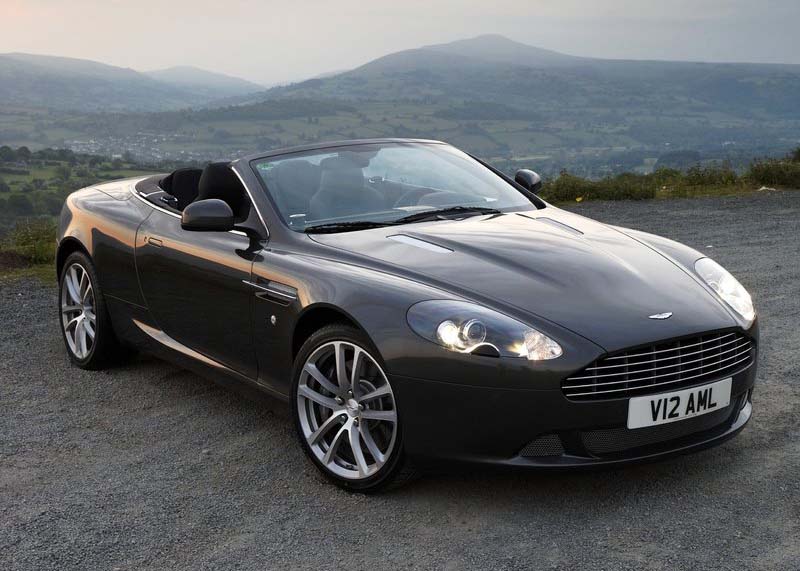
Aston Martin DB9, 2011


  • Aston Martin DB9, 2011
In the most significant programme of upgrades since its world debut in 2003, Aston Martin DB9 range has received a complete package of styling, engineering and equipment enhancements.

As the most successful Aston Martin of all-time (an honour it shares with the V8 Vantage) the DB9 has established itself as the definitive grand tourer, thanks to an enduring combination of understated elegance, sporting character and genuine luxury.

The new package of improvements compliments these core qualities perfectly. Subtle styling changes freshen the Aston Martin DB9's appearance, with a new front bumper, bright finish radiator grille and a re-shaped lower intake featuring bright hexagonal mesh. New headlight bezels, re-styled sills, silver brake calipers, 20-spoke diamond turned alloy wheels and clear rear light lenses complete the external revisions.

Under the skin the Aston Martin DB9's passive damping system has been replaced by a new Adaptive Damping System (ADS), which offers enhanced ride comfort together with sharper handling when switched to Sport mode. The ADS system is offered as standard equipment across the Aston Martin DB9 range, encompassing both Coupe and Volante (convertible). A new tyre pressure monitoring system, a revised Bluetooth microphone system and the addition of a new Double Apex alloy finish trim and Bang & Olufsen hi-fi options broaden the Aston Martin DB9's specification.

Aston Martin's Product Development Director, Ian Minards, explains that it is all part of an ongoing commitment to continual improvement: "The Aston Martin DB9 was the first car built at Gaydon adopting the VH architecture. It has evolved every year since, with significant changes including a power upgrade and successive reductions in CO2 emissions. The latest package of improvements goes further than ever, highlighting the Aston Martin DB9's qualities as a true sporting GT and underlining its role as the backbone car of our range."

The Aston Martin DB9 is available as either Coupe or Volante (convertible) with rear mid-mounted six-speed manual gearbox as standard or optional 'Touchtronic 2' six-speed automatic transmission. Production of the revised Aston Martin DB9 is already underway, with deliveries commencing in July. Prices start from £122,445 for the Aston Martin DB9 Coupe and £131,445 for the Aston Martin DB9 Volante.

Background
The introduction of the DB9 marked the beginning of Aston Martin's 21st Century renaissance. The first new model to be built at Aston Martin's headquarters in Gaydon, Warwickshire, and the first to be built around Aston Martin's rigid, lightweight, bonded aluminium VH architecture; the Aston Martin DB9 was an immediate and unparalleled success, setting a new tone for Aston Martins of the future.

Since its launch in 2003 some 12,500 DB9s have been produced and delivered to customers in 34 countries. This establishes it as the most successful Aston Martin model of all-time (jointly with the V8 Vantage), surpassing total sales of the DB7. Current Aston Martin DB9 production volume is around 1,500 cars per year.

Engineering
Since the DB9's introduction Aston Martin has demonstrated the versatility of the VH architecture by developing the Vantage, DBS and Rapide model ranges. In the process Aston Martin's engineers have gained an increasingly detailed understanding of the VH platform, which in turn has led to the constant improvement and evolution of existing established models.

In the latest package of improvements for Aston Martin DB9, hardware changes focus on the chassis, featuring a standard Adaptive Damping System (ADS) which offers a system constantly evaluating the optimum damper condition, similar to that seen on the DBS and Rapide models. Controlled by a button on the centre console, the two-stage adaptive dampers can be switched between their default mode, which is optimised for ride comfort, and a firmer sport mode, which delivers tighter body control and a more responsive feel. Such is the success of the Aston Martin DB9's new damping system that the DB9 Sport Pack upgrade has now been discontinued. However a Sport design alloy wheel is available as an option.

Performance comes courtesy of Aston Martin's celebrated 6.0-litre V12 engine, which develops an unchanged 470bhp and 442lb ft of torque. Mated to a choice of six-speed 'Touchtronic' paddle-shift automatic or six-speed H-pattern manual transmissions, the Aston Martin DB9 offers an intoxicating blend of effortless pace and sporting character. A top speed of 190mph and the ability to hit 60mph in just 4.6sec seal its credentials as the definitive 2+2 Grand Tourer.

Design
Improving upon what many consider to be one of the most beautiful cars in the world is a delicate exercise. According to Aston Martin's Director of Design, Marek Reichman, subtlety and fine attention to detail is the key: "The beauty of an Aston Martin comes from harmonious proportions, a ground-hugging stance, taut surfacing and a complete and thorough attention to detail. The Aston Martin DB9 epitomises these qualities; it is beautiful but subtle - not attention seeking."

At the front a new bumper is the main change, with a re-shaped lower intake featuring hexagonal mesh to compliment the new bright finish radiator grille. New headlamp bezels complete the fresh nose treatment. In profile the Aston Martin DB9's sill has also been changed, with a more prominent 'hockey stick' curve ahead of the rear wheels. Marek Reichman explains: "The DB9 remains one of the world's most beautiful sports cars and is instantly recognisable as an Aston Martin; the changes we have introduced here modernise the Aston Martin DB9 to keep it at the forefront of automotive design."

Other changes include silver brake calipers, 20-spoke diamond turned alloy wheels as standard, together with new design option wheels and a bright finish grille. Clear rear light lenses are also standard. Inside Double Apex alloy finish is now added to the list of options, along with the exceptional BeoSound audio system from Bang & Olufsen.

Motorsport
Mirroring the Aston Martin DB9's road-going success, Aston Martin Racing's DBR9 and DBRS9 endurance racers have proved hugely successful on racetracks around the world. With a total of some 20 DBR9 and 30 DBRS9s built and delivered to customer teams around the world, Aston Martins have consistently scored victories in a host of national and international championships.

Since winning on its race debut, at Sebring in 2005, the DBR9 has been established as a constant and hugely competitive car in the GT1 category, scoring back-to-back class victories at the greatest 24-hour race of them all - Le Mans - in 2007 and 2008.
Related Posts Plugin for WordPress, Blogger...